The best portable floor jacks for roadside emergencies include compact hydraulic floor jacks for stability and speed, hydraulic bottle jacks for heavy vehicles, scissor jacks for ultimate portability and cost-effectiveness, and electric jacks for hands-free convenience. A reliable portable jack is a crucial component of any well-prepared emergency roadside kit, empowering you to get back on the road quickly and securely.
What is a Floor Jack, and Why Do You Need a Portable One?
A floor jack is a mechanical device designed to lift a vehicle off the ground, providing crucial clearance for tasks like changing a flat tire, inspecting undercarriage components, or performing minor roadside repairs. While heavy-duty floor jacks are staples in professional garages, a portable floor jack is specifically engineered for ease of transport and quick deployment in non-garage environments, such as during a roadside emergency. These compact lifters prioritize factors like weight, size, and simple operation, making them indispensable for any driver who wants to be self-reliant when unforeseen vehicle issues arise away from home. Their design allows for a balance of lifting power and storable convenience, turning a potentially helpless roadside scenario into a manageable task.
Types of Portable Jacks for Roadside Emergencies
When preparing for roadside emergencies, the type of jack you carry significantly impacts how effectively and safely you can lift your vehicle. Each design offers a unique blend of portability, lifting capacity, and ease of use, tailored for different scenarios and vehicle types.
Hydraulic Jacks: Bottle and Compact Floor Jacks
Hydraulic jacks harness the power of fluid pressure to lift heavy loads with minimal effort. Within the portable category, two main types stand out:
-
Bottle Jacks: These jacks feature a compact, cylindrical design with a vertical lifting ram.
- Advantages: Bottle jacks are renowned for their incredibly high lifting capacities, often ranging from 2 to 50 tons, making them ideal for heavier vehicles like trucks, SUVs, and RVs. Their small footprint means they take up less trunk space than a traditional floor jack, and the hydraulic mechanism requires less physical strain than manual cranking.
- Disadvantages: Their narrow base can compromise stability on uneven or soft surfaces, a common challenge during roadside emergencies. They also typically have a shorter maximum lift height compared to floor jacks and may not fit under vehicles with very low ground clearance.
- Applications: Best suited for heavy-duty vehicle lifting where space is a concern, provided a stable, flat surface can be found.
-
Compact Floor Jacks (or Trolley Jacks): These are smaller, lighter versions of traditional wheeled garage jacks, often made with aluminum or a steel/aluminum hybrid for reduced weight.
- Advantages: Offering superior stability thanks to their wide bases and wheels, compact floor jacks provide excellent control during lifting and lowering. Many feature quick-lift mechanisms (like dual-pump pistons) for faster operation and come with a lower profile to accommodate a wider range of vehicles, including some with lower ground clearance.
- Disadvantages: Even lightweight models are generally bulkier and heavier than bottle or scissor jacks, requiring more storage space. They also tend to be more expensive.
- Applications: Excellent for those who prioritize stability and speed of lift, especially if they have some dedicated trunk space and work with a variety of vehicle types.
Mechanical Jacks: Scissor Jacks
|
Our Picks for the Best Floor Jack in 2026
As an Amazon Associate I earn from qualifying purchases.
|
||
| Num | Product | Action |
|---|---|---|
| 1 | Floor Jack 3 Ton Capacity Fast Lift Service Jack Steel Heavy Duty Hydraulic Car Jack |

|
| 2 | VEVOR 2.5 Ton Low Profile, Heavy-Duty Steel Racing Floor Jack with Single Piston Lift Pump, Lifting Range 3.35"-14.96" |
|
| 3 | Dewalt DWHT83550 TOUGHSERIES Construction Jack |
|
| 4 | DNA Motoring Low Profile Hydraulic Trolley Service/Floor Jack, 2 Ton (4000 lbs) Capacity, Lifting Range 5.1"-13", Blue, TOOLS-00474 |
|
| 5 | Low Profile Floor Jack 3 Ton (6600 lbs), Heavy Duty Hydraulic Jack for Car, Heavy-Duty Floor Jack with Dual Pistons Quick Lift Pump, Car Floor Jack with Lifting Range 3-1/8'' to 19-7/8'' |
|
| 6 | DNA Motoring TOOLS-00234 Low Profile Hydraulic Trolley Service/Floor Jack, 2 Ton (4000 lbs) Capacity, Lifting Range 5.1"-13", Black |
|
| 7 | Amazon Basics Hydraulic Floor and Portable Car Jack, 2.2 Short Ton/ 2 Metric Ton/ 2 Tonne / 2000 kg Capacity, Slow Release, Red |
|
| 8 | 3 Ton Low Profile, Aluminum and Steel Racing Floor Jack with Dual Pistons Quick Lift Pump for Sport Utility Vehicle, Lifting Range 3-15/16" min to 18-5/16" max, Net Weight 58.5 lb, Red |
|
| 9 | 3 Ton Floor Jack (6600 lbs), Heavy Duty Hydraulic Jack for Car, Heavy-Duty Floor Jack with Single Piston Pump, Quick Lift Car Jack 3 ton with Lifting Range 5.5'' to 18.5'' |
|
| 10 | Floor Jack 2.5 Ton (5500 lbs), Low Profile Floor Jack with Single Piston Pump, Heavy Duty Steel Hydraulic Jack for Car, Jack for Car with Lifting Range 3.4'' to 14.6'' |
|
Scissor jacks are perhaps the most recognizable type of portable jack, often included as standard equipment in vehicle emergency kits.
- Advantages: Their defining feature is their highly compact and lightweight design, which allows them to be easily stored in almost any vehicle trunk or under a seat. They operate via a simple mechanical screw system that expands a crisscrossing frame, making them straightforward to use for emergency tire changes. They are also the most affordable option.
- Disadvantages: Operating a scissor jack requires significant manual effort, as you crank a handle to raise the vehicle, which can be tiring and slow. They have the lowest lifting capacity (typically 1.5 to 2 tons) and are less stable than hydraulic jacks, particularly on uneven ground. They are designed for temporary lifting only and are not suitable for extended work.
- Applications: Best for light vehicles (sedans, small SUVs) and quick, emergency tire changes when extreme portability and cost-effectiveness are the primary concerns.
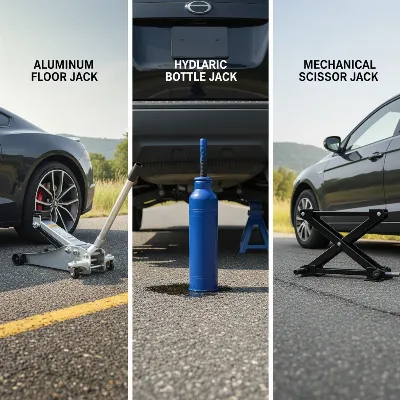 Various types of portable floor jacks including hydraulic bottle, compact trolley, and scissor jacks for roadside emergencies.
Electric Jacks
Electric jacks represent a modern evolution in portable lifting solutions, prioritizing user convenience.
- Advantages: These jacks eliminate manual effort entirely, lifting your vehicle with the press of a button. They typically plug into your vehicle’s 12-volt accessory outlet (cigarette lighter), making them simple to power on the go. Many models also incorporate additional features like built-in LED lights or tire inflators, adding extra utility during emergencies.
- Disadvantages: Rely on a power source (your car’s battery), which could be an issue if the battery is drained or the outlet is faulty. While convenient, some models may lift slower than quick-pump hydraulic jacks, and their electronic components can potentially be more susceptible to failure than purely mechanical systems.
- Applications: Ideal for those who prioritize ease of use and want to minimize physical strain during a roadside emergency, particularly for standard passenger vehicles.
Comparing Portable Floor Jacks for Roadside Use
Choosing the best portable jack involves weighing several critical factors. The following table provides a clear comparison of the most common types suitable for roadside emergencies:
| Feature | Hydraulic Bottle Jack | Compact Hydraulic Floor Jack | Scissor Jack | Electric Jack |
|---|---|---|---|---|
| Lifting Capacity | High (2-50 tons) | Medium to High (1.5-3.5 tons) | Low (1.5-2 tons) | Medium (1.5-3 tons) |
| Min/Max Lift Height | Moderate (shorter range) | Wide (good for low-profile to SUVs) | Moderate (limited range) | Moderate (similar to scissor) |
| Weight | Medium (cylindrical, dense) | Medium to Heavy (wheeled, bulkier) | Very Lightweight | Lightweight to Medium |
| Portability | Good (compact, fits in small spaces) | Moderate (can be bulky, but wheeled) | Excellent (very small/light) | Good (often comes with case) |
| Ease of Use | Easy (hydraulic pump) | Easy (hydraulic pump, wheeled) | Moderate (manual cranking) | Very Easy (push-button) |
| Stability | Moderate (narrow base) | Excellent (wide base, wheels) | Low to Moderate (small footprint) | Moderate to Good (depending on base) |
| Durability | High (sturdy construction) | High (steel/aluminum hybrid) | Moderate (basic components) | Moderate (mechanical + electronics) |
| Price | Moderate | High | Low | Moderate to High |
| Special Features | Raw power, compact footprint | Quick lift, low profile options | OEM inclusion, simplicity | Hands-free operation, sometimes light/inflator |
How to Choose the Right Portable Floor Jack
Selecting the perfect portable floor jack for your roadside emergency kit requires careful consideration of your specific vehicle and anticipated use.
Determining Your Usage Needs
Before diving into specifications, ask yourself a few key questions:
- What type of vehicle do you drive? A compact sedan requires less lifting capacity than a heavy SUV, truck, or van. Always check your vehicle’s gross weight to ensure the jack’s capacity is sufficient.
- How often do you anticipate using it? For occasional emergency tire changes, a simpler, lighter jack might suffice. If you frequently travel long distances or venture off-road, a more robust and stable option is advisable.
- What is your budget? Prices vary significantly based on type, material, and features. Set a realistic budget, but prioritize safety and reliability over the lowest price.
- How much storage space do you have? The trunk of a small car has different storage capabilities than the bed of a pickup truck. Ensure the jack fits comfortably without impeding other essential items.
Key Factors When Choosing
Once you’ve assessed your needs, focus on these critical attributes:
- Lifting Capacity (Maximum Load): This is paramount. The jack’s rated capacity must exceed your vehicle’s heaviest corner weight. A good rule of thumb is to choose a jack with a capacity that is at least three-quarters of your vehicle’s curb weight.
- Lift Height (Minimum and Maximum):
- Minimum height: Crucial for vehicles with low ground clearance to ensure the jack can slide underneath.
- Maximum height: Ensure it can lift your tire high enough off the ground to clear the wheel well for replacement, plus a little extra for maneuvering.
- Durability and Material Quality: Look for robust construction materials. Steel offers strength and longevity, while aluminum (or aluminum-steel hybrids) provides a significant reduction in weight, enhancing portability without sacrificing too much strength.
- Brand Reputation and Supplier Trustworthiness: Opt for reputable brands known for quality and safety. Read reviews and look for products with good warranty support.
- Safety Features: A reliable jack will include safety mechanisms. Look for features like a bypass valve (to prevent over-pumping and overloading), a wide and stable base, and a rubber-padded saddle to protect your vehicle’s frame.
Top Portable Floor Jack Brands
While specific models evolve, several brands consistently receive high marks for their portable and emergency-ready jacks:
- Torin (Big Red): Widely recognized for affordable and reliable options, including popular scissor jacks and compact hydraulic bottle jacks.
- Arcan: Known for producing high-quality, durable aluminum and steel hybrid floor jacks that offer an excellent balance of strength and portability.
- Pro-Lift: Offers a range of floor jacks and bottle jacks, often praised for their value and built-in safety features.
- Powerbuilt: Features innovative designs like their “Unijack,” which combines a jack and jack stand in one unit, enhancing safety and convenience for roadside repairs.
- VEVOR: A growing brand offering a variety of jacks, including electric and compact hydraulic models, often with competitive pricing and useful integrated features.
How to Use a Portable Floor Jack Safely
Safety is non-negotiable when working with any lifting equipment, especially in a potentially challenging roadside environment. Following proper procedures is crucial to prevent accidents and ensure a successful repair.
- Find a Safe Location: Pull over to a flat, stable, and hard surface away from traffic. Avoid soft ground, inclines, or uneven areas, as these can cause the jack to slip or the vehicle to fall. Turn on your hazard lights.
- Engage Parking Brake and Block Wheels: Engage your vehicle’s parking brake. If possible, place wheel chocks or sturdy blocks behind the wheels that will remain on the ground to prevent the vehicle from rolling.
- Locate Jack Points: Consult your vehicle’s owner’s manual to identify the approved jack points. These are reinforced areas designed to safely support the vehicle’s weight without causing damage. Incorrect placement can lead to structural damage or a dangerous vehicle fall.
- Position the Jack: Place the jack squarely under the designated jack point. Ensure the saddle (the part that contacts the vehicle) is centered and securely gripping the jack point. For hydraulic jacks, ensure the release valve is fully closed.
- Lift the Vehicle: Slowly and steadily raise the vehicle. Pump the handle for hydraulic jacks or turn the crank for scissor jacks. Lift only until the tire is just clear of the ground, providing enough space to change it. Avoid excessive lifting.
- Use Jack Stands (If Possible): While sometimes impractical for a quick roadside tire change, if you anticipate needing to spend any time under the vehicle (which should generally be avoided roadside), always use properly rated jack stands to support the vehicle after lifting. Never rely solely on the jack.
- Lower the Vehicle: Once the task is complete, ensure all tools are clear of the wheel well. Slowly lower the vehicle by gently turning the release valve (for hydraulic jacks) or cranking in reverse (for scissor jacks). Remove the jack and chocks.
> “Always remember, a jack is for lifting, not for sustaining. Never get under a vehicle that is supported only by a jack. Prioritize stability and follow your vehicle’s specific guidelines to ensure your safety.” – John Smith, Senior Automotive Technician, ReviewHoster.com
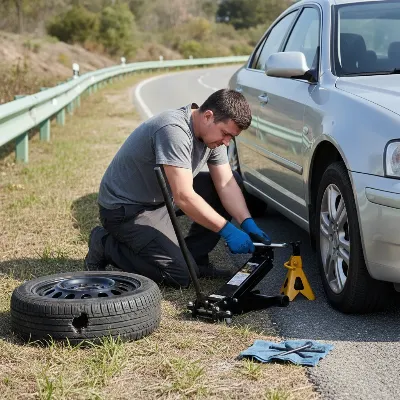 Person safely using a portable floor jack with jack stand on a flat surface for a roadside tire change.
Maintenance and Care for Your Portable Floor Jack
Proper maintenance ensures your portable floor jack remains reliable and safe for years to come.
- Clean After Use: Wipe down your jack after each use to remove dirt, grime, and moisture. This prevents corrosion and keeps moving parts free of debris.
- Check Hydraulic Fluid (for Hydraulic Jacks): Periodically inspect the hydraulic fluid level and condition. Refer to your owner’s manual for recommended fluid types and replacement intervals. Low or contaminated fluid can impair performance and safety.
- Inspect for Damage: Before and after each use, visually inspect the jack for any signs of wear, damage, cracks, or leaks. Pay close attention to welds, pins, and moving components. Do not use a damaged jack.
- Lubricate Moving Parts: Apply a light lubricant to pivot points and screw mechanisms (for scissor jacks) to ensure smooth operation and prevent seizing.
- Proper Storage: Store your portable floor jack in a clean, dry place, ideally in its original case or a protective bag, to shield it from dust and environmental elements.
Conclusion
A portable floor jack is an indispensable tool that offers peace of mind and self-sufficiency for any driver facing a roadside emergency. Whether you opt for the raw power of a hydraulic bottle jack, the stability of a compact floor jack, the ultimate portability of a scissor jack, or the sheer convenience of an electric model, making an informed choice is key. By understanding the types, considering your vehicle’s specific needs, and adhering strictly to safety protocols, you equip yourself to handle unexpected vehicle issues confidently. Don’t wait for a flat tire to discover you’re unprepared; invest in the right portable floor jack today and drive with greater assurance. What type of portable jack do you trust most to keep you safe on the open road?
Frequently Asked Questions
How much lifting capacity do I need for a portable floor jack?
Generally, you should choose a jack with a lifting capacity that is at least three-quarters of your vehicle’s curb weight to ensure it can safely lift the heaviest corner. Always consult your vehicle’s owner’s manual for specific recommendations and the vehicle’s gross weight.
Can I use a portable floor jack on uneven ground during an emergency?
It is strongly advised not to use any jack on uneven or soft ground. This significantly compromises stability and can lead to dangerous accidents. Always try to find the flattest, most stable surface possible, and consider placing a sturdy base plate under the jack if the ground is less than ideal.
Is a scissor jack safe for regular use, or just emergencies?
Scissor jacks are primarily designed for temporary, emergency use, such as changing a flat tire by the roadside. While compact and convenient, they are generally less stable and slower to operate than hydraulic jacks, making them unsuitable for frequent use or extensive repairs.
Do I need jack stands with a portable floor jack?
For any situation where you might place any part of your body under the vehicle, jack stands are absolutely essential. A jack is a lifting device, not a vehicle support device. While quick roadside tire changes may sometimes preclude their use, always prioritize safety by using jack stands whenever possible.
How often should I perform maintenance on my hydraulic portable jack?
It is recommended to inspect your hydraulic jack before and after each use, and to check the hydraulic fluid level at least once a year. If you notice any leaks, sluggish operation, or damage, address it immediately or have the jack serviced by a professional.
Frequently Asked Questions
How much lifting capacity do I need for a portable floor jack?
You should choose a portable floor jack with a lifting capacity that is at least three-quarters of your vehicle's curb weight. This ensures it can safely lift the heaviest corner of your vehicle. Always consult your vehicle's owner's manual for specific recommendations and the vehicle's gross weight.
Can I use a portable floor jack on uneven ground during an emergency?
It is strongly advised not to use any portable jack on uneven or soft ground, as this significantly compromises stability and can lead to dangerous accidents. Always try to find the flattest, most stable surface possible. If the ground is less than ideal, consider placing a sturdy base plate under the jack for added stability.
Is a scissor jack safe for regular use, or just emergencies?
Scissor jacks are primarily designed for temporary, emergency use, such as changing a flat tire by the roadside. They are generally less stable and slower to operate than hydraulic jacks, making them unsuitable for frequent use or extensive repairs in a garage setting.
Do I need jack stands with a portable floor jack?
For any situation where you might place any part of your body under the vehicle, jack stands are absolutely essential. A jack is a lifting device, not a vehicle support device. While quick roadside tire changes may sometimes preclude their use, always prioritize safety by using properly rated jack stands whenever possible.
How often should I perform maintenance on my hydraulic portable jack?
It is recommended to inspect your hydraulic portable jack before and after each use. Additionally, you should check the hydraulic fluid level at least once a year. If you notice any leaks, sluggish operation, or damage, address it immediately or have the jack serviced by a professional.
How to Use a Portable Floor Jack Safely
Using a portable floor jack safely during a roadside emergency is crucial to prevent accidents. Follow these steps to ensure a successful and secure vehicle lift.
Pull over to a flat, stable, and hard surface away from traffic. Avoid soft ground, inclines, or uneven areas, as these can cause the jack to slip or the vehicle to fall. Turn on your hazard lights to alert other drivers.
Engage your vehicle's parking brake firmly. If possible, place wheel chocks or sturdy blocks behind the wheels that will remain on the ground to prevent the vehicle from rolling unexpectedly during the lift.
Consult your vehicle's owner's manual to identify the approved jack points, which are reinforced areas designed for lifting. Place the jack squarely under the designated jack point, ensuring the saddle is centered and securely gripping the point. For hydraulic jacks, confirm the release valve is fully closed.
Slowly and steadily raise the vehicle by pumping the handle for hydraulic jacks or turning the crank for scissor jacks. Lift only until the tire is just clear of the ground, providing enough space to change it. Avoid excessive lifting beyond what is necessary.
Once the task is complete, ensure all tools are clear of the wheel well. Slowly lower the vehicle by gently turning the release valve (for hydraulic jacks) or cranking in reverse (for scissor jacks). Remove the jack and wheel chocks once the vehicle is fully on the ground.

The electric jack I got is pretty convenient, especially for hands-free operation. It saves a lot of effort compared to my old scissor jack. My only minor complaint is that the cord could be a little longer for some situations, but overall, it’s a solid piece of equipment for quick tire changes.
You can’t beat a good scissor jack for ultimate portability and cost-effectiveness. I keep one in my small car and it’s perfect for emergencies. It’s lightweight and doesn’t take up much room, which is crucial when you’re trying to maximize trunk space. Great for basic tire changes.
I tried out a hydraulic bottle jack for my truck, and while it definitely handles the weight, it’s a bit bulkier than I expected for ‘portable.’ It works well for heavy vehicles, but it takes up more space in my trunk than I’d prefer. Still, it gets the job done when I need to lift my F-150.
I recently picked up a compact hydraulic floor jack after reading about them, and it’s been a game-changer for my roadside kit. It’s super stable and lifts my sedan quickly, which is exactly what I need when I’m stuck on the side of the highway. Definitely worth the investment for peace of mind.