Lubricating floor jack wheels is a simple DIY task that ensures smooth operation and extends the tool’s lifespan. Technicians should lubricate their floor jack wheels every six months or every two vehicle oil changes, whichever comes first, using appropriate lubricants like multi-purpose grease, machine oil, or dry spray lubricants. This routine maintenance prevents stiffness, noise, and premature wear caused by dirt, moisture, and heavy loads.
This comprehensive guide will walk you through the simple, fast, and effective DIY process of lubricating your floor jack’s wheels. We’ll explore the various types of lubricants available, outline the essential tools you’ll need, and provide a step-by-step procedure to ensure your floor jack rolls as smoothly as the day it was new. By dedicating a small amount of time to this crucial maintenance task, you’ll enhance your jack’s performance, extend its lifespan, and make your garage work safer and more efficient.
Understanding Your Floor Jack’s Wheels and Why They Need Lubrication
Floor jacks typically feature two types of wheels: fixed front wheels and pivoting rear caster wheels. Both are essential for the jack’s mobility, allowing you to position it accurately under a vehicle and move it around your workspace. However, these wheels are constantly exposed to dirt, dust, moisture, and even corrosive fluids like oil and brake cleaner. This harsh environment, combined with the heavy loads they bear, makes them prime candidates for wear and tear if not properly maintained.
Lubrication is paramount for several reasons. Firstly, it reduces friction between moving metal parts, such as axles and bearings, allowing the wheels to rotate freely and quietly. Without it, metal-on-metal contact leads to excessive wear, heat buildup, and eventually, grinding noises or complete seizure. Secondly, a good lubricant creates a protective barrier against rust and corrosion, safeguarding the metal components from environmental damage. Lastly, proper lubrication ensures the smooth and predictable movement of your jack. A stiff wheel can make precise positioning difficult, increasing the risk of accidents or damage to your vehicle. Regular lubrication ensures your floor jack remains a reliable and safe tool in your arsenal.
Choosing the Right Lubricant: Greases vs. Oils vs. Sprays
Selecting the appropriate lubricant is crucial for effective wheel maintenance. The choice often depends on the type of wheel, the presence of grease fittings, environmental conditions, and how frequently you use your jack. Each category—greases, oils, and sprays—offers distinct advantages and disadvantages.
Grease
|
Our Picks for the Best Floor Jack in 2026
As an Amazon Associate I earn from qualifying purchases.
|
||
| Num | Product | Action |
|---|---|---|
| 1 | DNA Motoring Low Profile Hydraulic Trolley Service/Floor Jack, 2 Ton (4000 lbs) Capacity, Lifting Range 5.1"-13", Blue, TOOLS-00474 |

|
| 2 | 3 Ton Floor Jack (6600 lbs), Heavy Duty Hydraulic Jack for Car, Heavy-Duty Floor Jack with Single Piston Pump, Quick Lift Car Jack 3 ton with Lifting Range 5.5'' to 18.5'' |
|
| 3 | VEVOR 2.5 Ton Low Profile, Heavy-Duty Steel Racing Floor Jack with Single Piston Lift Pump, Lifting Range 3.35"-14.96" |
|
| 4 | Dewalt DWHT83550 TOUGHSERIES Construction Jack |
|
| 5 | DNA Motoring TOOLS-00234 Low Profile Hydraulic Trolley Service/Floor Jack, 2 Ton (4000 lbs) Capacity, Lifting Range 5.1"-13", Black |
|
| 6 | Amazon Basics Hydraulic Floor and Portable Car Jack, 2.2 Short Ton/ 2 Metric Ton/ 2 Tonne / 2000 kg Capacity, Slow Release, Red |
|
| 7 | Low Profile Floor Jack 3 Ton (6600 lbs), Heavy Duty Hydraulic Jack for Car, Heavy-Duty Floor Jack with Dual Pistons Quick Lift Pump, Car Floor Jack with Lifting Range 3-1/8'' to 19-7/8'' |
|
| 8 | Floor Jack 3 Ton Capacity Fast Lift Service Jack Steel Heavy Duty Hydraulic Car Jack |
|
| 9 | 3 Ton Low Profile, Aluminum and Steel Racing Floor Jack with Dual Pistons Quick Lift Pump for Sport Utility Vehicle, Lifting Range 3-15/16" min to 18-5/16" max, Net Weight 58.5 lb, Red |
|
| 10 | Floor Jack 2.5 Ton (5500 lbs), Low Profile Floor Jack with Single Piston Pump, Heavy Duty Steel Hydraulic Jack for Car, Jack for Car with Lifting Range 3.4'' to 14.6'' |
|
Greases are semi-solid lubricants, typically a mixture of oil and a thickening agent. They excel at providing long-lasting lubrication and protection, particularly in high-pressure or high-load applications.
- Types: Common choices include multi-purpose grease (often rated NLGI #2 with an Extreme Pressure, or EP, additive), white lithium grease, and even marine grease for excellent water resistance. Some experts suggest Lucas Red ‘N’ Tacky for its adhesive properties. For better penetration, some DIYers thin grease with a minimal amount of oil or even gasoline (exercising extreme caution and ensuring proper ventilation).
- Pros: Greases offer superior, long-lasting protection against wear and corrosion. They stay in place well, reducing the need for frequent reapplication.
- Cons: Their thickness can make penetration difficult without disassembly or a grease gun with a zerk fitting. They can also attract dirt and grit if exposed, which could lead to abrasion.
- Application: Ideal for wheels that can be disassembled, allowing for direct packing onto axles and bearings. They are also perfect for any wheels that feature grease zerks, which allow for easy injection using a grease gun.
Oil
Oils are liquid lubricants that offer excellent penetration and can quickly quiet squeaks and free up stiff parts.
- Types: Light bearing oil, 30W/40W machine oil, or even heavy gear oil can be effective. Penetrating oils such as WD-40, silicone lubricant spray, or Liquid Wrench Heavy Duty Lubricating Oil are popular for their ability to seep into tight spaces.
- Pros: Oils penetrate easily into inaccessible areas, making them suitable for quick applications without extensive disassembly. They are less likely to attract heavy dirt compared to thick greases.
- Cons: Oils have a shorter lifespan than greases and require more frequent reapplication. They can also run off, potentially creating a mess.
- Application: Best for general surface lubrication of axles and pivot points where disassembly isn’t practical, or for regular, lighter maintenance.
Spray Lubricants
Spray lubricants combine the ease of aerosol application with the protective qualities of greases or oils.
- Types: Spray grease (often containing lithium or other compounds), clear penetrating spray grease, and dry lubricants (like Liquid Wrench Dry Lubricant) are common. Dry lubricants are particularly good as they dry to a non-tacky film, preventing dirt accumulation.
- Pros: Extremely easy to apply, reaching tight spots with minimal effort. Dry lubricants are excellent for keeping wheels clean as they don’t attract dust.
- Cons: Less precise application, can be messier if not careful. Some spray greases might not offer the same heavy-duty protection as tube grease.
- Application: Excellent for quick touch-ups on axles and caster bearings, especially when you need to avoid attracting dirt.
| Lubricant Type | Advantages | Disadvantages | Ideal Application |
|---|---|---|---|
| Grease | Long-lasting protection, high load capacity, adheres well | Can attract dirt, difficult penetration without disassembly | Disassembled wheels, grease zerks, heavy-duty use |
| Oil | Excellent penetration, easy initial application | Shorter lifespan, requires frequent reapplication | Quick lubrication, hard-to-reach axles, lighter use |
| Spray Lubricant | Very easy application, covers large areas | Less precise, can be thin, potential for overspray | Quick touch-ups, caster bearings, dry environments |
| Dry Lubricant Spray | Dries clean, doesn’t attract dirt or dust | Less heavy-duty protection than grease | Areas prone to dust, frequent use in dirty environments |
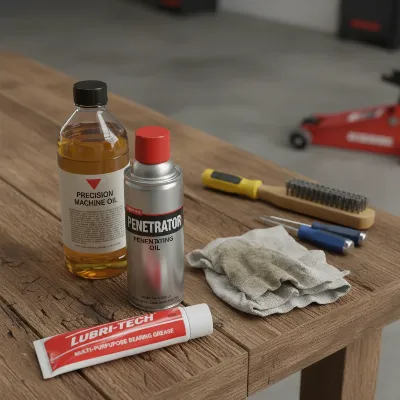 An assortment of lubricants and tools for floor jack wheel maintenance on a workbench.
Tools and Materials You’ll Need
Before you begin, gather all the necessary tools and materials to make the process smooth and efficient. Having everything on hand will prevent interruptions and ensure a thorough job.
- Your chosen lubricant: Grease (tube or spray), oil (bearing or machine), or dry lubricant spray.
- Degreaser: An aerosol degreaser, automotive brake cleaner, or GUNK Eco-degreaser will work wonders in removing old grime and grease.
- Clean rags or microfiber towels: For wiping down surfaces and cleaning up excess lubricant.
- Wire brush or stiff-bristled brush: To scrub away stubborn dirt and rust.
- Flathead screwdriver and/or pliers: For removing wheel clips, split rings, or axle nuts.
- Wrenches or sockets: If your wheels are secured with nuts and bolts.
- Gloves: To protect your hands from grease and chemicals.
- Safety glasses: To protect your eyes, especially when using spray products or a wire brush.
- Compressed air (optional): Great for blasting away dust and debris from tight crevices.
- Grease gun with needle tip attachment (optional): If your floor jack has grease zerks.
Step-by-Step DIY Guide to Lubricating Floor Jack Wheels
Lubricating your floor jack’s wheels is a straightforward process, but proper execution ensures the best results and prolongs the life of your equipment. Follow these steps for a fast and effective DIY treatment.
Safety First
Always prioritize safety when working with any garage equipment. Ensure your floor jack is on a flat, stable surface before you begin. Never work under a vehicle supported solely by a floor jack; use jack stands for any tasks requiring you to be beneath the car. For this lubrication task, the jack will be on its own, but having a stable base is crucial. Wear gloves to protect your hands from grease and cleaning agents, and safety glasses to shield your eyes from debris, especially when spraying or brushing.
Clean the Wheels Thoroughly
The first and most critical step is to remove all existing dirt, grime, and old, congealed lubricant. Applying new lubricant over old contaminants is counterproductive and can lead to further wear.
- Position the Jack: Tilt the floor jack onto its side or back to easily access the wheels and their axles.
- Initial Wipe-Down: Use a clean rag to wipe off as much loose dirt and old grease as possible from the wheels, axles, and surrounding areas.
- Apply Degreaser: Spray an ample amount of degreaser or brake cleaner onto the wheels, axles, and any pivot points. Let it sit for a few minutes to break down the grime.
- Scrub and Clean: Use a wire brush or stiff-bristled brush to vigorously scrub away embedded dirt, rust, and hardened grease. For tight spots, a smaller brush or even a stiff toothbrush can be effective.
- Rinse (if applicable) and Dry: If using a water-based degreaser, rinse thoroughly and immediately dry the components with compressed air or a clean cloth to prevent rust. If using brake cleaner, it will evaporate quickly. Ensure all parts are completely dry before proceeding.
Accessing the Axles and Bearings
For the most effective lubrication, especially with grease, you might need to partially disassemble the wheels. Some floor jack wheels, particularly the front ones, are relatively easy to remove, often held by split rings or simple bolts.
- Inspect Wheel Attachment: Examine how your specific floor jack wheels are attached. Many front wheels are secured by a single bolt or a split ring/E-clip at the end of the axle. Caster wheels might be part of a larger assembly.
- Remove Wheels (if possible): If the design allows, use a flathead screwdriver to carefully pry open split rings or remove E-clips. For bolted wheels, use the appropriate wrench or socket. Gently slide the wheel off its axle. Some older or simpler jacks might have press-fit axles that are harder to remove without specialized tools; in such cases, focus on cleaning and lubricating externally as best as you can.
- Clean Exposed Parts: Once the wheels are off, thoroughly clean the axles, the inside of the wheel hubs, and any exposed bearings using degreaser and a brush. This is your chance to remove deeply embedded grit.
Applying the Lubricant
Now that the components are clean and dry, it’s time to apply the fresh lubricant.
- For Fixed Front Wheels (Axles):
- If you removed the wheels: Apply a generous layer of your chosen grease directly to the axle shaft and pack a small amount into the wheel’s hub/bearing area. If using oil, apply it liberally to the axle, allowing it to wick into the bearings.
- If you cannot remove the wheels: Use a penetrating oil or spray grease. Spray directly into the small gaps between the wheel and the jack’s frame, aiming for the axle and any visible bearing surfaces. You may need to rock the wheel gently to help the lubricant penetrate.
- For Pivoting Caster Wheels (Axles and Bearings):
- Caster wheels have two main lubrication points: their rotation axle and the swivel mechanism.
- Rotation Axle: Similar to the front wheels, apply grease or oil to the axle where the wheel spins.
- Swivel Mechanism: This is where the caster rotates to change direction. If there are grease zerks, attach your grease gun and pump in multi-purpose grease until you see fresh grease extrude. If no zerks, liberally spray penetrating oil or spray grease into the swivel pivot points, working the caster back and forth to distribute the lubricant.
- For Grease Zerks: If your jack has any grease zerks (small metal nipples) on the main pivot points or even some caster assemblies, use a grease gun to inject multi-purpose grease. Keep pumping until you see fresh grease push out the old, dirty grease.
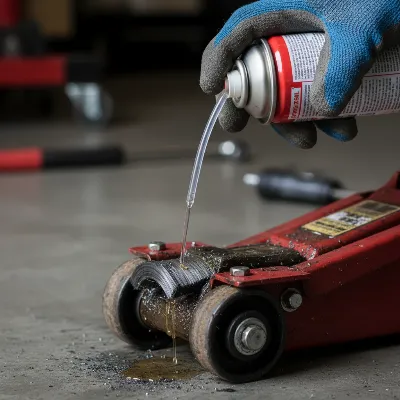 A close-up of a hand applying lubricant to a floor jack caster wheel.
Reassembly and Testing
Once lubrication is complete, carefully reassemble any components you took apart and test the results.
- Reassemble Wheels: Slide the wheels back onto their axles, ensuring any washers or spacers are correctly positioned. Secure them with their clips, split rings, or bolts/nuts.
- Wipe Excess: Clean up any excess lubricant on the outside of the wheels or frame. This prevents it from attracting unnecessary dirt.
- Test Movement: Roll the floor jack around your garage floor. The wheels should now glide smoothly and quietly. Work the caster wheels back and forth to ensure the swivel mechanism is also moving freely. Pump the jack up and down a few times to further distribute any lubricant that might have worked its way into other moving parts.
Maintaining Your Floor Jack Wheels for Longevity
Consistent maintenance is the secret to a long-lasting and reliable floor jack. Lubricating the wheels isn’t a one-time fix but a recurring task that should be integrated into your equipment care routine.
- Frequency of Lubrication: Most experts recommend lubricating your floor jack’s moving parts, including the wheels, every six months or every two oil changes for your vehicle, whichever comes first. If you use your jack frequently in a professional setting or in dusty/dirty environments, check and lubricate the wheels more often – perhaps before or after every major use if using a lighter oil.
- Storage Tips: How you store your jack significantly impacts its wheel health. Always lower the jack fully before storage to relieve pressure on the hydraulic system. Store it in a dry, clean space to prevent rust and corrosion. If possible, cover it or keep it in a cabinet to shield it from dust and moisture, which are enemies of smooth-rolling wheels. Never store a floor jack tipped over on its side, as this can lead to fluid leaks and damage to internal seals.
- Regular Inspection: Make it a habit to quickly inspect your floor jack before and after each use. Look for any signs of excessive wear on the wheels, bent axles, or damaged caster bearings. Check for accumulated dirt or debris that could impede movement. Addressing small issues promptly can prevent them from escalating into larger, more costly repairs.
Common Issues and Troubleshooting
Even with diligent maintenance, you might occasionally encounter issues with your floor jack wheels. Here’s a quick guide to troubleshooting common problems:
- Still Squeaking?
- Insufficient Lubrication: You might not have applied enough lubricant, or it hasn’t fully penetrated all the moving parts. Reapply, perhaps using a penetrating oil, and try to work the wheels vigorously to distribute it.
- Missed Spots: Double-check that all pivot points, axles, and bearings have been lubricated.
- Worn Components: Squeaking can also indicate worn-out bearings or axles that need replacement. If lubrication doesn’t help, consider inspecting for physical damage.
- Wheels Stiff After Lubrication?
- Too Much Lubricant (Grease): If you over-packed with thick grease, it might be impeding movement, especially in cold weather.
- Wrong Type of Lubricant: A grease that’s too thick for your jack’s design or operating temperature can cause stiffness.
- Contamination: Old, hardened dirt or rust might still be present. A more thorough cleaning and degreasing might be necessary.
- Attracting Too Much Dirt?
- Exposed Grease: If you used a tacky grease and didn’t wipe away the excess, it will act like a magnet for dust and debris. Wipe off all excess.
- Environment: If your garage is particularly dusty, consider switching to a dry lubricant for the exposed wheel parts. Dry lubricants create a film that doesn’t attract grit, keeping your wheels cleaner.
- Storage: Ensure you are storing your jack in a clean, covered environment to minimize dust exposure.
“A well-lubricated floor jack isn’t just about smooth operation; it’s a testament to safety and the longevity of your investment. Don’t let a squeaky wheel be the weakest link in your garage.” – Admin, ReviewHoster.com
Conclusion
Keeping your floor jack’s wheels in prime condition is a straightforward and rewarding DIY task that pays dividends in both performance and safety. By regularly cleaning and lubricating these often-neglected components, you ensure smooth maneuverability, prevent premature wear, and extend the overall lifespan of your valuable tool. Whether you opt for a long-lasting grease, a penetrating oil, or a clean-drying spray, the key is consistent attention and a thorough application.
Don’t let stiff, squeaky wheels slow down your garage projects or put unnecessary strain on your equipment. Embrace this simple maintenance habit, and your floor jack will continue to be a reliable and effortless partner for years to come. What’s one essential maintenance task you’ve found makes the biggest difference for your most used garage tools?
Frequently Asked Questions
How often should I lubricate my floor jack wheels?
It is generally recommended to lubricate your floor jack wheels every six months, or more frequently if you use your jack often or in dirty environments. A good rule of thumb is to check them every two vehicle oil changes.
Can I use WD-40 on floor jack wheels?
Yes, WD-40 can be used as a temporary penetrating lubricant for floor jack wheels to free up stiff parts and stop squeaks. However, it’s a lighter lubricant and may require more frequent application than dedicated grease or machine oil for long-term protection.
What’s the best lubricant for cold weather on floor jack wheels?
For cold weather, a lubricant with good low-temperature performance is crucial. Marine grease often offers excellent waterproofing and remains effective in colder conditions. Some multi-purpose greases also have good cold-weather ratings. Dry lubricants can also be effective as they won’t thicken in the cold.
Do all floor jacks have grease zerks?
No, not all floor jacks have grease zerks (fittings for a grease gun). Many older or simpler models, especially on the wheels, may not have them. In such cases, you will need to apply penetrating oils or spray greases directly to the axles and pivot points, or disassemble the wheels for direct grease application.
Frequently Asked Questions
How often should I lubricate my floor jack wheels?
It is generally recommended to lubricate your floor jack wheels every six months, or more frequently if you use your jack often or in dirty environments. A good rule of thumb is to check them every two vehicle oil changes to ensure optimal performance and longevity.
Can I use WD-40 on floor jack wheels for maintenance?
Yes, WD-40 can be used as a temporary penetrating lubricant for floor jack wheels to free up stiff parts and stop squeaks. However, it's a lighter lubricant and may require more frequent application than dedicated grease or machine oil for long-term protection against wear and corrosion.
What is the best lubricant for floor jack wheels in cold weather?
For cold weather, a lubricant with good low-temperature performance is crucial. Marine grease often offers excellent waterproofing and remains effective in colder conditions. Some multi-purpose greases also have good cold-weather ratings, and dry lubricants can be effective as they won't thicken in the cold.
Do all floor jacks come equipped with grease zerks?
No, not all floor jacks have grease zerks (fittings for a grease gun). Many older or simpler models, especially on the wheels, may not have them. In such cases, you will need to apply penetrating oils or spray greases directly to the axles and pivot points, or disassemble the wheels for direct grease application.
What tools are needed to lubricate floor jack wheels?
To lubricate floor jack wheels, you'll need your chosen lubricant (grease, oil, or spray), a degreaser, clean rags, a wire brush, a flathead screwdriver or pliers, gloves, and safety glasses. Optional tools include compressed air and a grease gun with a needle tip attachment if your jack has zerks.
Lubricate Floor Jack Wheels for Smooth Operation
This guide outlines a simple, fast, and effective DIY process to lubricate your floor jack's wheels, ensuring smooth movement and extending its lifespan.
Tilt the floor jack to access the wheels. Use a clean rag to wipe off loose dirt, then spray degreaser onto the wheels and axles. Scrub vigorously with a wire brush to remove embedded grime and rust, then dry completely.
Inspect how your wheels are attached; many are secured by a bolt or E-clip. If possible, remove the wheels using a screwdriver or wrench. Thoroughly clean the exposed axles, wheel hubs, and bearings with degreaser and a brush to remove deeply embedded grit.
For fixed front wheels, apply a generous layer of grease to the axle shaft and wheel hub, or spray penetrating oil into gaps if wheels cannot be removed. For caster wheels, lubricate the rotation axle and liberally spray penetrating oil or grease into the swivel mechanism, working it back and forth. Use a grease gun for any zerks until fresh grease extrudes.
Carefully slide the wheels back onto their axles, ensuring all washers and spacers are correctly positioned, then secure them. Wipe away any excess lubricant to prevent dirt attraction. Roll the floor jack around to test for smooth, quiet movement and work the caster wheels to ensure the swivel mechanism moves freely.
Lubricate your floor jack wheels every six months or every two oil changes. Store the jack fully lowered in a dry, clean space, ideally covered, to prevent rust and dust accumulation. Regularly inspect wheels for wear or damage to address issues promptly.

Great advice! I always just assumed my floor jack was supposed to be a bit clunky. The tip about lubricating every six months or two oil changes is a game-changer for me. I used some machine oil I had lying around, and it made a noticeable difference in how smoothly it moves.
I’ve been neglecting my floor jack for years, and it was getting really stiff. The guide on using multi-purpose grease was spot on. My jack rolls like new now, and it only took me about 20 minutes. Definitely worth the small effort to keep my tools in top shape.
The steps were clear, but I found it a bit messy trying to get the lubricant into the tight spots. Maybe a different applicator would help. My jack is quieter now, but it still feels a little sticky in one wheel. I used a dry spray lubricant, so maybe I just need to reapply.
My old floor jack was making a terrible squealing noise every time I moved it. Following the instructions here to clean and lubricate the wheels completely eliminated the noise. It’s amazing how such a simple maintenance task can extend the lifespan of an expensive tool. Highly recommend this guide.