Changing the hydraulic fluid in a floor jack is crucial for maintaining its performance and safety, typically recommended every 2-3 years for home users or annually for professional shops. This process involves draining old, degraded fluid and refilling with fresh hydraulic jack oil, followed by bleeding air from the system to ensure smooth and consistent lifting operation. Neglecting fluid changes can lead to compromised lifting power, erratic operation, or even dangerous failures under load.
What is a Floor Jack and How Does it Work?
A floor jack is a portable lifting device used to raise heavy objects, most commonly vehicles, for maintenance or repair. Its robust design and hydraulic power make it far superior to a standard car jack for routine use. At its core, a floor jack operates on the principle of hydraulics: applying force to an incompressible fluid, typically oil, in a confined space. When you pump the handle, a small piston pushes fluid into a larger cylinder, generating immense lifting power to raise the jack’s saddle and, consequently, your vehicle. This mechanical advantage allows you to lift thousands of pounds with relatively little effort.
The primary components include a reservoir for the hydraulic fluid, a pump assembly, a main lifting cylinder, a ram piston, and a release valve. As the fluid moves through the system, it transfers pressure, enabling the ram piston to lift heavy loads. When the job is done, opening the release valve allows the fluid to return to the reservoir, smoothly lowering the jack.
Why is Changing Hydraulic Fluid Crucial for Your Floor Jack?
The hydraulic fluid in your floor jack plays a critical role in its operation, much like oil in an engine. Over time, this fluid degrades due to constant use, exposure to temperature fluctuations, and contamination from microscopic debris or moisture. As the fluid breaks down, it loses its viscosity and lubricating properties, turning darker and becoming less effective at transferring pressure. This degradation directly impacts your jack’s performance.
Old, contaminated fluid can lead to several problems: a jack that struggles to lift, operates erratically, or even fails to hold a load. Air bubbles can also become trapped in the system, causing spongy operation or incomplete lifts. Beyond performance issues, neglecting fluid changes poses significant safety risks. A jack with compromised hydraulic fluid can fail under load, leading to severe injury or damage to your vehicle. Regular fluid replacement ensures the system operates smoothly, efficiently, and most importantly, safely, protecting both you and your equipment.
Essential Tools and Materials for the Job
Before you begin the process of changing your floor jack’s hydraulic fluid, gathering the right tools and materials is crucial. Being prepared ensures a smooth, efficient, and safe operation. You won’t want to be scrambling for supplies once you’ve started draining the old fluid.
Here’s a checklist of what you’ll need:
- Hydraulic Jack Oil: This is the most important item. Always use dedicated hydraulic jack oil, specifically formulated for hydraulic systems. While some sources suggest automatic transmission fluid (ATF) as a temporary substitute, it’s best to stick to manufacturer-recommended hydraulic fluid for optimal performance and seal longevity.
- Funnel: A clean funnel with a narrow spout will help you pour the new fluid accurately into the reservoir, preventing spills and contamination.
- Rags or Shop Towels: Essential for wiping away spills, cleaning the area around the filler plug, and keeping your hands clean.
- Screwdriver (Flathead or Phillips): You’ll likely need this to remove the filler plug or any cover plates protecting the hydraulic reservoir.
- Drain Pan or Container: A sturdy pan is necessary to collect the old hydraulic fluid. Ensure it’s large enough to hold the entire volume of fluid your jack contains.
- Safety Glasses: Eye protection is paramount to shield against splashes of hydraulic fluid.
- Gloves: Chemical-resistant gloves will protect your hands from the old fluid and keep them clean.
Important Fluid Note: Never use brake fluid, engine oil, or any other non-hydraulic fluid in your floor jack. These can rapidly degrade the internal seals, leading to leaks and irreversible damage to the hydraulic system.
Step-by-Step Guide: Safely Changing Hydraulic Fluid in Your Floor Jack
Changing the hydraulic fluid in your floor jack is a straightforward process, but it requires careful attention to detail and adherence to safety protocols. Follow these steps to ensure a successful and safe fluid replacement.
Preparation and Safety First
|
Our Picks for the Best Floor Jack in 2026
As an Amazon Associate I earn from qualifying purchases.
|
||
| Num | Product | Action |
|---|---|---|
| 1 | 3 Ton Floor Jack (6600 lbs), Heavy Duty Hydraulic Jack for Car, Heavy-Duty Floor Jack with Single Piston Pump, Quick Lift Car Jack 3 ton with Lifting Range 5.5'' to 18.5'' |

|
| 2 | 3 Ton Low Profile, Aluminum and Steel Racing Floor Jack with Dual Pistons Quick Lift Pump for Sport Utility Vehicle, Lifting Range 3-15/16" min to 18-5/16" max, Net Weight 58.5 lb, Red |
|
| 3 | VEVOR 2.5 Ton Low Profile, Heavy-Duty Steel Racing Floor Jack with Single Piston Lift Pump, Lifting Range 3.35"-14.96" |
|
| 4 | Floor Jack 3 Ton Capacity Fast Lift Service Jack Steel Heavy Duty Hydraulic Car Jack |
|
| 5 | Dewalt DWHT83550 TOUGHSERIES Construction Jack |
|
| 6 | DNA Motoring TOOLS-00234 Low Profile Hydraulic Trolley Service/Floor Jack, 2 Ton (4000 lbs) Capacity, Lifting Range 5.1"-13", Black |
|
| 7 | Amazon Basics Hydraulic Floor and Portable Car Jack, 2.2 Short Ton/ 2 Metric Ton/ 2 Tonne / 2000 kg Capacity, Slow Release, Red |
|
| 8 | Floor Jack 2.5 Ton (5500 lbs), Low Profile Floor Jack with Single Piston Pump, Heavy Duty Steel Hydraulic Jack for Car, Jack for Car with Lifting Range 3.4'' to 14.6'' |
|
| 9 | DNA Motoring Low Profile Hydraulic Trolley Service/Floor Jack, 2 Ton (4000 lbs) Capacity, Lifting Range 5.1"-13", Blue, TOOLS-00474 |
|
| 10 | Low Profile Floor Jack 3 Ton (6600 lbs), Heavy Duty Hydraulic Jack for Car, Heavy-Duty Floor Jack with Dual Pistons Quick Lift Pump, Car Floor Jack with Lifting Range 3-1/8'' to 19-7/8'' |
|
Safety is paramount when working with any lifting equipment. Neglecting these initial steps can lead to accidents or injury.
- Position the Jack: Place your floor jack on a flat, level, and stable surface, such as a concrete garage floor. This prevents the jack from rolling or tilting during the procedure.
- No Load: Ensure there is absolutely no load on the jack. It should be fully lowered and disconnected from any vehicle or object.
- Wear Safety Gear: Don your safety glasses and gloves to protect your eyes and hands from hydraulic fluid.
- Locate Filler Plug: Consult your jack’s owner’s manual to find the exact location of the hydraulic fluid filler plug. On most floor jacks, it’s a small, rubber or metal plug located on the main body of the pump housing, sometimes under a cover plate. Use your screwdriver to carefully remove any cover plates if necessary.
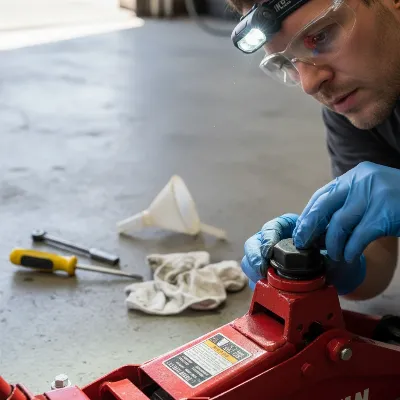 Technician preparing a floor jack for hydraulic fluid change, with safety glasses and gloves, tools laid out.
Draining the Old Fluid
Once you’ve prepared and located the filler plug, it’s time to remove the old, degraded hydraulic fluid.
- Open Release Valve: Turn the jack’s release valve counterclockwise to fully open it. This releases any internal pressure and allows the jack to be fully lowered.
- Remove Filler Plug: Using your screwdriver, carefully remove the hydraulic fluid filler plug. Place the plug in a safe, clean spot where it won’t get lost or contaminated.
- Drain Fluid: Position your drain pan directly under the filler hole. Carefully tilt or invert the floor jack over the pan to allow the old hydraulic fluid to drain completely. This may take several minutes as the thick fluid slowly flows out. Gently rock the jack back and forth to ensure as much old fluid as possible is expelled.
- Proper Disposal: Hydraulic fluid is a hazardous waste. Do not dispose of it in household trash or pour it down the drain. Collect the old fluid in a sealed container and take it to a local automotive recycling center or hazardous waste facility for proper disposal.
Refilling with New Hydraulic Fluid
With the old fluid drained and properly disposed of, you can now replenish your jack’s system with fresh hydraulic fluid.
- Return to Upright Position: Place the floor jack back on its flat, level surface in its normal upright operating position.
- Insert Funnel: Place the clean funnel into the filler hole. This will help prevent spills and ensure the fluid goes directly into the reservoir.
- Fill with New Fluid: Slowly pour the new hydraulic jack oil into the funnel. Fill the reservoir until the fluid level reaches just below the filler hole. Be careful not to overfill, as this can cause leaks or internal pressure issues when the jack is in operation. Allow any air bubbles to settle before checking the final level.
- Replace Filler Plug: Once the fluid is at the correct level, remove the funnel and firmly replace the filler plug. If there was a cover plate, reattach it securely. Ensure everything is tightened to prevent leaks.
Bleeding Air from the Hydraulic System
After refilling, it’s crucial to bleed any trapped air from the hydraulic system. Air bubbles can cause the jack to lift unevenly, fail to reach full extension, or feel “spongy.”
- Open Release Valve: With the filler plug securely in place, fully open the jack’s release valve by turning it counterclockwise.
- Pump the Handle: Pump the jack handle briskly 5-10 times. This action helps to circulate the new fluid and force any trapped air bubbles towards the top of the system and out through the open release valve.
- Close Release Valve: Turn the release valve clockwise until it is fully closed.
- Cycle the Jack: Pump the jack handle to raise the saddle to its maximum height. Once it reaches full extension, continue to pump the handle several more times (e.g., 3-5 times). This helps build full pressure and expel any remaining air.
- Lower the Jack: Open the release valve again to fully lower the jack.
- Repeat if Necessary: If the jack still feels spongy, lifts unevenly, or doesn’t reach full extension, repeat the bleeding process (steps 1-5) until the operation feels smooth and consistent.
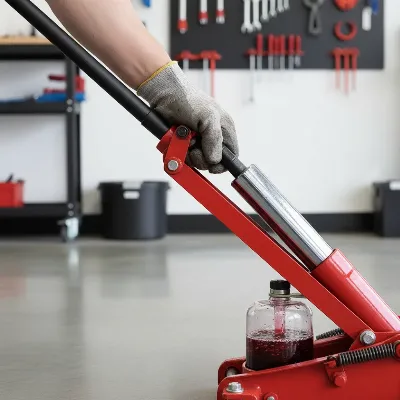 Hand pumping floor jack handle to bleed air after fluid change, showing smooth operation.
Troubleshooting Common Issues After Fluid Change
Even after carefully following the steps, you might encounter some common issues. Don’t worry, many of these are easily resolved.
- Jack Still Not Lifting or Lifting Weakly: The most common culprit here is trapped air in the hydraulic system. Revisit the “Bleeding Air from the Hydraulic System” steps and perform them thoroughly. Sometimes, it takes a few cycles to completely purge all the air. Also, double-check the hydraulic fluid level – if it’s too low, the pump won’t be able to build sufficient pressure.
- Jack Feels Spongy or Sinks Slowly: This is another strong indicator of air in the system. Air compresses, while hydraulic fluid does not, leading to a “spongy” feel when pumping or a gradual loss of pressure. Repeat the bleeding procedure until the jack operates smoothly and holds its position firmly.
- Fluid Leaks: If you notice new leaks after the fluid change, first check that the filler plug is securely tightened. If it’s a rubber plug, ensure it’s seated correctly and isn’t damaged. If the leak persists from seals around the ram or pump, it might indicate worn-out seals that require professional repair or replacement. In such cases, it’s best to consult a qualified technician.
- Jack Not Lowering Fully: This could be due to air trapped in the lowering mechanism or the release valve not being fully open. Ensure the release valve is completely turned counterclockwise. If air is the issue, another round of bleeding might help.
Maintenance Tips for a Longer Floor Jack Lifespan
Proper maintenance goes beyond just changing the hydraulic fluid; it encompasses several practices that will significantly extend the life and reliability of your floor jack. A well-maintained jack is a safe and efficient jack.
- Regular Fluid Checks: Periodically check the hydraulic fluid level (at least once a year or more frequently with heavy use). Top up as needed, always ensuring the jack is fully lowered and on a level surface before checking.
- Keep it Clean: After each use, wipe down your floor jack, removing any dirt, grease, or debris. This prevents contaminants from entering the hydraulic system or fouling moving parts. Pay special attention to the ram and pump assembly.
- Lubricate Moving Parts: Occasionally apply a light coat of grease or lubricating oil to the wheels, pivot points, and any exposed moving mechanisms. This reduces friction and prevents corrosion, ensuring smooth operation.
- Proper Storage: Always store your floor jack in a fully lowered position to relieve pressure on the hydraulic seals. Keep it in a dry, clean environment, away from extreme temperatures and moisture, which can degrade seals and contaminate fluid.
- Avoid Overloading: Never exceed the stated weight capacity of your floor jack. Overloading puts excessive strain on the hydraulic system and can lead to premature wear or catastrophic failure.
- Inspect Before Use: Before every use, quickly inspect the jack for any signs of damage, leaks, or worn parts. Check the integrity of the frame, wheels, and handle. Address any issues before lifting a load.
> “Routine maintenance, especially hydraulic fluid changes and proper storage, is the single most effective way to ensure your floor jack remains a dependable and safe tool for years to come.” – John Smith, Master Automotive Technician
Conclusion
A well-maintained floor jack is a cornerstone of any safe and productive automotive workspace. Understanding how to properly change its hydraulic fluid is not just a maintenance task; it’s a commitment to safety and longevity for this essential tool. By meticulously following the steps for preparation, draining, refilling, and critically, bleeding air from the system, you ensure your floor jack operates at peak performance. Regular checks and attentive care will prevent breakdowns, enhance lifting stability, and protect you from potential hazards.
Don’t let neglected fluid turn your reliable jack into a risky piece of equipment. Take the time to give your floor jack the care it deserves, and it will serve you faithfully for countless lifts. What steps will you take today to ensure your floor jack is ready for its next challenge?
Frequently Asked Questions
What type of fluid should I use for my hydraulic floor jack?
Always use dedicated hydraulic jack oil. While automatic transmission fluid (ATF) can sometimes be used in an emergency, it’s not ideal for long-term use. Never use brake fluid, engine oil, or other fluids, as they can severely damage the jack’s internal seals and hydraulic components.
How often should I change the hydraulic fluid in my floor jack?
The frequency depends on usage. For professional shops, annual fluid changes might be necessary. For home users, changing the fluid every 2-3 years, or whenever the fluid appears dark, murky, or the jack’s performance degrades, is a good general guideline. Regular checks are always recommended.
Why is my floor jack not lifting after adding fluid?
If your floor jack isn’t lifting properly after a fluid change, the most common reason is trapped air within the hydraulic system. You need to thoroughly bleed the air by opening the release valve, pumping the handle several times, closing the valve, and then cycling the jack through its full extension and retraction until operation is smooth. Double-check that the fluid level is correct and not overfilled.
Frequently Asked Questions
What type of fluid is best for a hydraulic floor jack?
Always use dedicated hydraulic jack oil specifically formulated for hydraulic systems. While automatic transmission fluid (ATF) can be a temporary substitute, it's not recommended for long-term use. Never use brake fluid or engine oil, as they will cause irreversible damage to the jack's internal seals.
How frequently should hydraulic fluid be changed in a floor jack?
For home users, changing the hydraulic fluid every 2-3 years is a good guideline, or sooner if the fluid appears dark or the jack's performance declines. Professional shops might require annual fluid changes due to heavy usage. Regular fluid level checks are also important.
Why does my floor jack feel spongy after a fluid change?
A spongy feel or weak lifting after a fluid change indicates trapped air in the hydraulic system. To resolve this, thoroughly bleed the air by opening the release valve, pumping the handle 5-10 times, closing the valve, and cycling the jack through its full range of motion until operation is smooth. Ensure the fluid level is correct and not overfilled.
What are the safety precautions for changing floor jack fluid?
Always position the floor jack on a flat, stable surface with no load. Wear safety glasses and chemical-resistant gloves to protect against fluid splashes. Consult your owner's manual for the filler plug location and ensure proper disposal of old hydraulic fluid, as it is hazardous waste.
Can I use engine oil in my hydraulic floor jack?
No, never use engine oil in your hydraulic floor jack. Engine oil lacks the specific properties required for hydraulic systems and can rapidly degrade the internal seals, leading to leaks and severe damage to the jack's components. Always use dedicated hydraulic jack oil.
Safely Change Hydraulic Fluid in Your Floor Jack
This guide outlines the essential steps to safely change the hydraulic fluid in your floor jack, ensuring optimal performance and longevity for your equipment.
Place the floor jack on a flat, stable surface with no load. Wear safety glasses and gloves. Locate the hydraulic fluid filler plug, often under a cover plate, using your owner's manual for guidance.
Fully open the release valve and remove the filler plug. Position a drain pan under the filler hole and carefully tilt the jack to allow all old hydraulic fluid to drain completely. Dispose of the hazardous fluid properly at a recycling center.
Return the jack to an upright position and insert a clean funnel into the filler hole. Slowly pour new hydraulic jack oil until the fluid level is just below the filler hole, being careful not to overfill. Replace the filler plug securely.
With the filler plug secure, fully open the release valve and pump the handle 5-10 times to circulate fluid and expel air. Close the valve, then cycle the jack to its maximum height and back down. Repeat if the jack still feels spongy or lifts unevenly.

Fantastic guide! I’ve always been a bit intimidated by hydraulic fluid changes, but this made it seem manageable. The recommendation to change it every 2-3 years for home users is something I’ll definitely stick to now. My jack was definitely showing signs of compromised lifting power, and this fixed it right up. Thanks for the detailed walkthrough.
Good breakdown of the process. I usually just top off my fluid, but realizing how important a full change is for safety, especially for professional shops like mine, was a good wake-up call. The part about neglecting fluid changes leading to erratic operation really hit home. My only minor gripe is I wish there was a quick tip on disposing of the old fluid.
I’ve been putting off changing the fluid in my old floor jack for ages, and it was definitely starting to feel sluggish. The steps here for draining the old fluid were super clear, and I appreciate the reminder about bleeding the air out. My jack feels like new again, lifting much smoother and more consistently. Definitely a worthwhile maintenance task.
I tried following these steps for my older jack, and while the instructions for refilling with fresh hydraulic jack oil were clear, I had a tough time with the initial draining. My jack’s drain plug was really seized up, which wasn’t really covered. It eventually worked out, but it took a lot more effort than I expected. Still, good info on why it’s important.