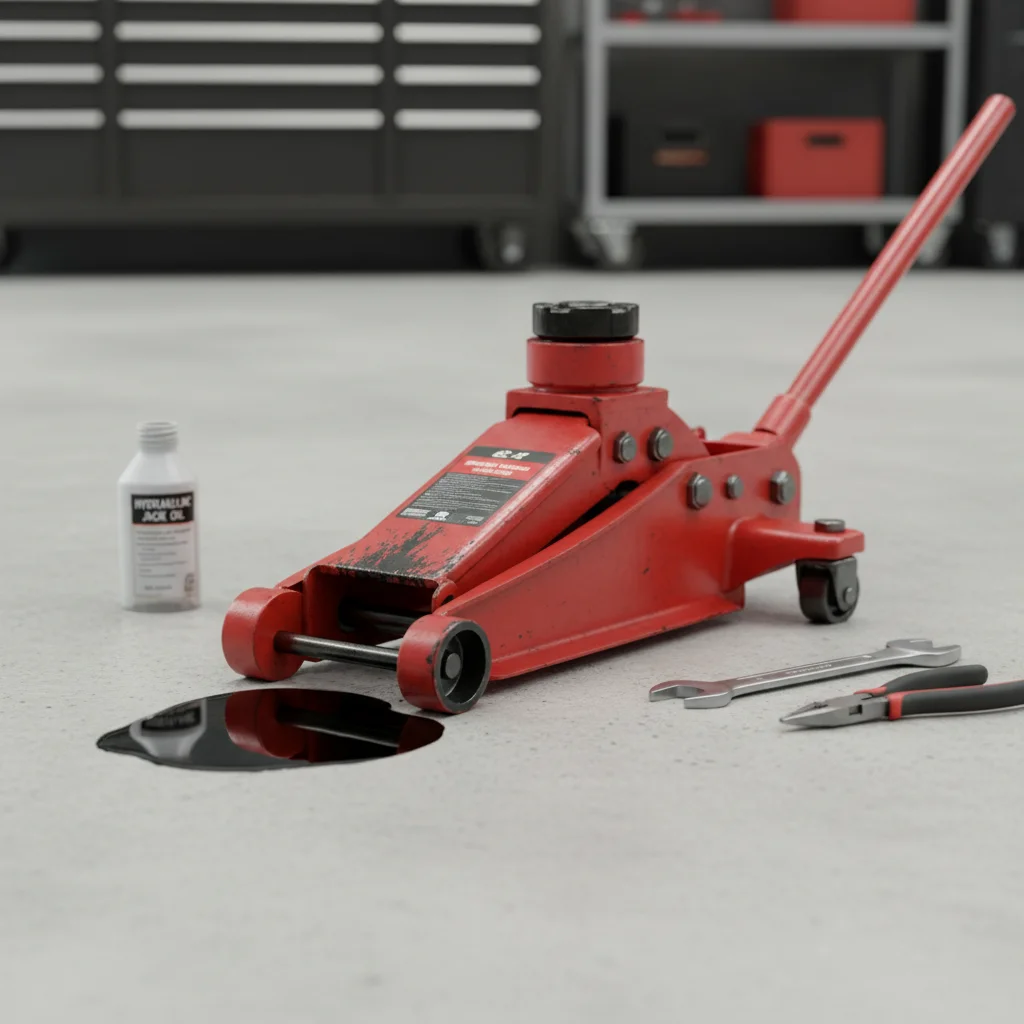
If your floor jack won’t stay up, the most common culprit is a hydraulic fluid leak, often from worn seals or a loose release valve. Addressing this issue promptly is crucial for safety and effective lifting. This guide will walk you through the five most common reasons why your floor jack might be failing to hold a load and provide actionable fixes.
Understanding Hydraulic System Basics
A floor jack operates on the principle of hydraulics, using incompressible fluid to generate force. When you pump the handle, hydraulic fluid is pushed from a reservoir into the main cylinder, lifting the ram. A check valve prevents the fluid from flowing back, maintaining the lift. If any part of this system fails, the jack will struggle to hold its position.
Reason 1: Low or Contaminated Hydraulic Fluid
Insufficient hydraulic fluid means there isn’t enough volume to maintain pressure, causing the jack to slowly lower. Contaminated fluid, often due to dirt or debris, can also impede the proper functioning of valves and seals. Regularly checking and replacing your hydraulic fluid is a key maintenance step.
- Check fluid level when the jack is fully lowered.
- Use only manufacturer-recommended hydraulic jack oil.
- Bleed air after refilling to ensure proper operation.
- Inspect fluid for discoloration or particles.
Reason 2: Worn or Damaged Seals
|
Our Picks for the Best Floor Jack in 2026
As an Amazon Associate I earn from qualifying purchases.
|
||
| Num | Product | Action |
|---|---|---|
| 1 | DNA Motoring TOOLS-00234 Low Profile Hydraulic Trolley Service/Floor Jack, 2 Ton (4000 lbs) Capacity, Lifting Range 5.1"-13", Black |

|
| 2 | Floor Jack 2.5 Ton (5500 lbs), Low Profile Floor Jack with Single Piston Pump, Heavy Duty Steel Hydraulic Jack for Car, Jack for Car with Lifting Range 3.4'' to 14.6'' |
|
| 3 | Dewalt DWHT83550 TOUGHSERIES Construction Jack |
|
| 4 | 3 Ton Floor Jack (6600 lbs), Heavy Duty Hydraulic Jack for Car, Heavy-Duty Floor Jack with Single Piston Pump, Quick Lift Car Jack 3 ton with Lifting Range 5.5'' to 18.5'' |
|
| 5 | DNA Motoring Low Profile Hydraulic Trolley Service/Floor Jack, 2 Ton (4000 lbs) Capacity, Lifting Range 5.1"-13", Blue, TOOLS-00474 |
|
| 6 | Amazon Basics Hydraulic Floor and Portable Car Jack, 2.2 Short Ton/ 2 Metric Ton/ 2 Tonne / 2000 kg Capacity, Slow Release, Red |
|
| 7 | 3 Ton Low Profile, Aluminum and Steel Racing Floor Jack with Dual Pistons Quick Lift Pump for Sport Utility Vehicle, Lifting Range 3-15/16" min to 18-5/16" max, Net Weight 58.5 lb, Red |
|
| 8 | VEVOR 2.5 Ton Low Profile, Heavy-Duty Steel Racing Floor Jack with Single Piston Lift Pump, Lifting Range 3.35"-14.96" |
|
| 9 | Low Profile Floor Jack 3 Ton (6600 lbs), Heavy Duty Hydraulic Jack for Car, Heavy-Duty Floor Jack with Dual Pistons Quick Lift Pump, Car Floor Jack with Lifting Range 3-1/8'' to 19-7/8'' |
|
| 10 | Floor Jack 3 Ton Capacity Fast Lift Service Jack Steel Heavy Duty Hydraulic Car Jack |
|
Seals are critical components that prevent hydraulic fluid from leaking out of the system. Over time, these rubber or plastic seals can dry out, crack, or become damaged, leading to internal or external leaks. Even a small leak can cause a significant loss of pressure, making the jack unable to hold a load.
Replacing worn seals often requires a seal kit specific to your jack’s make and model. This can be a DIY task for experienced mechanics but may require professional help if you’re unfamiliar with hydraulic systems.
Reason 3: Faulty Release Valve
The release valve controls the lowering of the jack by allowing fluid to return to the reservoir. If this valve is not fully closed or is damaged, it can allow fluid to bypass the main cylinder, causing the jack to drop. Sometimes, simply tightening the release valve can resolve the issue. In other cases, the valve mechanism itself might be faulty and require replacement.
Reason 4: Air in the Hydraulic System
Air trapped within the hydraulic system is compressible, unlike hydraulic fluid. This compressibility prevents the jack from building and maintaining the necessary pressure to hold a load. Bleeding the air out of your floor jack is a common maintenance procedure that can often resolve issues with a jack that won’t stay up. This typically involves opening the release valve and pumping the handle several times.
Reason 5: Overloading the Jack
Every floor jack has a specified weight capacity. Exceeding this limit can not only damage the jack’s internal components but also compromise its ability to hold a load safely. Always ensure the weight of the vehicle you are lifting is well within the jack’s rated capacity. Refer to your jack’s manual for its specific weight limits.
By systematically checking these five common issues, you can often diagnose and fix why your floor jack won’t stay up, ensuring safe and effective use for all your automotive needs.
