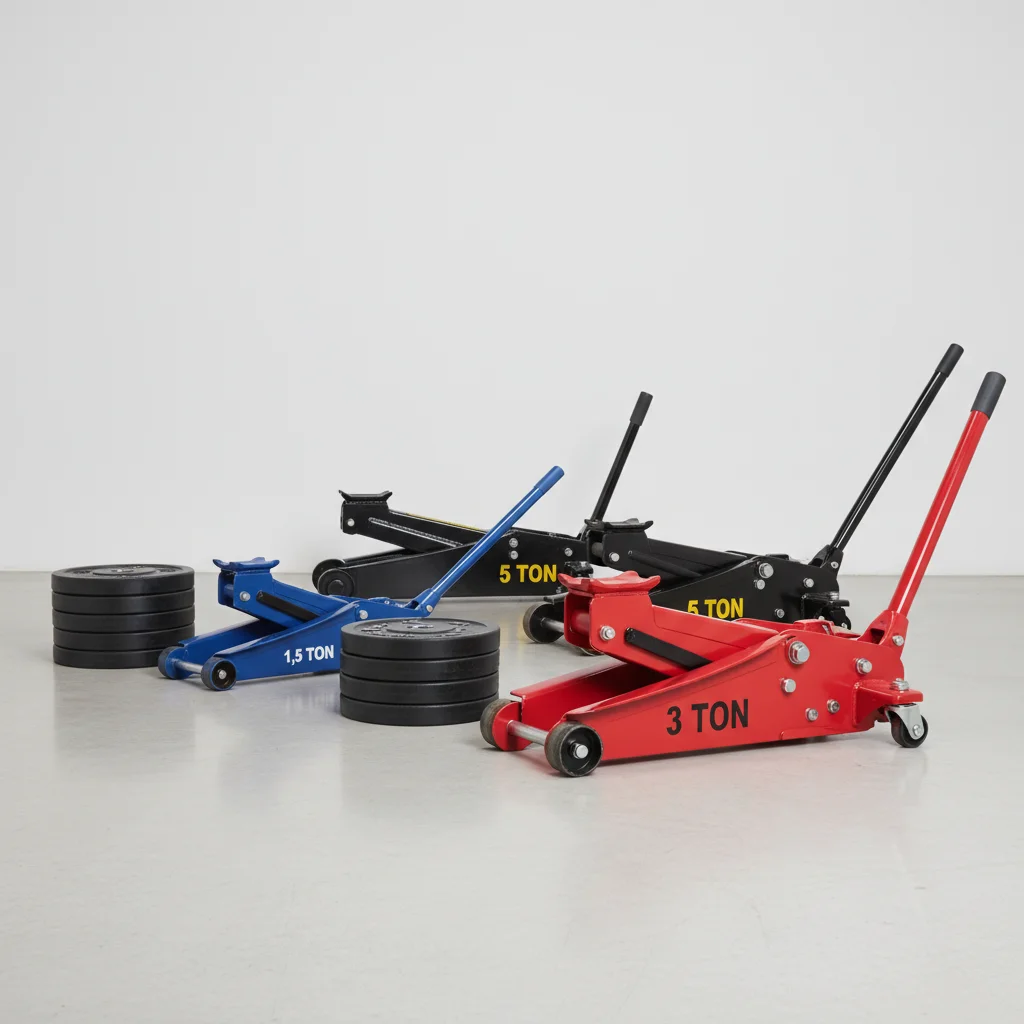
Understanding your floor jack’s weight capacity is crucial for safety and efficiency. A typical 3-ton floor jack, for instance, can safely lift vehicles weighing up to 6,000 pounds, which covers most passenger cars, SUVs, and light trucks. However, it’s vital to remember that this rating refers to the maximum weight the jack can lift, not the entire vehicle’s weight, as you’re only lifting one section at a time.
Understanding Load Ratings and Safety Margins
Floor jack load ratings are not arbitrary; they are determined by engineering standards and safety factors. Manufacturers build in a significant safety margin, meaning a 3-ton jack is designed to withstand forces greater than 6,000 pounds before failure. However, this margin is not an invitation to overload the jack. Always operate within the stated capacity to prevent structural damage to the jack, potential injury, or damage to the vehicle. Overloading can cause hydraulic seals to fail, structural components to bend, or even catastrophic collapse.
It’s also important to consider the distribution of weight. When lifting a vehicle, you’re typically only supporting a portion of its total weight. For example, if a car weighs 4,000 pounds, and you’re lifting one end, you might only be supporting 1,000 to 1,500 pounds. However, always err on the side of caution and use a jack with a capacity that comfortably exceeds the heaviest corner or end of the vehicle you intend to lift.
Matching Jack Capacity to Vehicle Type
Selecting the right floor jack capacity depends entirely on the vehicles you plan to service. Here’s a general guide:
- 1.5-2 Ton Jacks: Ideal for compact cars, sedans, and smaller coupes.
- 2.5-3 Ton Jacks: Suitable for most passenger vehicles, including mid-size sedans, small SUVs, and light trucks. This is the most common capacity for DIY mechanics.
- 3.5-4 Ton Jacks: Recommended for larger SUVs, heavier trucks, and some commercial vehicles.
- 5+ Ton Jacks: Typically for heavy-duty trucks, commercial vehicles, and specialized applications.
Always check your vehicle’s gross vehicle weight rating (GVWR) in the owner’s manual to ensure you select an appropriately sized jack.
Factors Affecting Safe Lifting Capacity
|
Our Picks for the Best Floor Jack in 2026
As an Amazon Associate I earn from qualifying purchases.
|
||
| Num | Product | Action |
|---|---|---|
| 1 | DNA Motoring TOOLS-00234 Low Profile Hydraulic Trolley Service/Floor Jack, 2 Ton (4000 lbs) Capacity, Lifting Range 5.1"-13", Black |

|
| 2 | Floor Jack 3 Ton Capacity Fast Lift Service Jack Steel Heavy Duty Hydraulic Car Jack |
|
| 3 | Amazon Basics Hydraulic Floor and Portable Car Jack, 2.2 Short Ton/ 2 Metric Ton/ 2 Tonne / 2000 kg Capacity, Slow Release, Red |
|
| 4 | DNA Motoring Low Profile Hydraulic Trolley Service/Floor Jack, 2 Ton (4000 lbs) Capacity, Lifting Range 5.1"-13", Blue, TOOLS-00474 |
|
| 5 | Dewalt DWHT83550 TOUGHSERIES Construction Jack |
|
| 6 | VEVOR 2.5 Ton Low Profile, Heavy-Duty Steel Racing Floor Jack with Single Piston Lift Pump, Lifting Range 3.35"-14.96" |
|
| 7 | Low Profile Floor Jack 3 Ton (6600 lbs), Heavy Duty Hydraulic Jack for Car, Heavy-Duty Floor Jack with Dual Pistons Quick Lift Pump, Car Floor Jack with Lifting Range 3-1/8'' to 19-7/8'' |
|
| 8 | Floor Jack 2.5 Ton (5500 lbs), Low Profile Floor Jack with Single Piston Pump, Heavy Duty Steel Hydraulic Jack for Car, Jack for Car with Lifting Range 3.4'' to 14.6'' |
|
| 9 | 3 Ton Low Profile, Aluminum and Steel Racing Floor Jack with Dual Pistons Quick Lift Pump for Sport Utility Vehicle, Lifting Range 3-15/16" min to 18-5/16" max, Net Weight 58.5 lb, Red |
|
| 10 | 3 Ton Floor Jack (6600 lbs), Heavy Duty Hydraulic Jack for Car, Heavy-Duty Floor Jack with Single Piston Pump, Quick Lift Car Jack 3 ton with Lifting Range 5.5'' to 18.5'' |
|
Several factors beyond the stated capacity can influence the safe operation of your floor jack. The condition of the jack itself is paramount; a jack with worn seals, bent components, or a leaking hydraulic system will not perform to its rated capacity. Regular maintenance, including checking fluid levels and inspecting for damage, is essential.
The surface on which you’re operating the jack also plays a critical role. A soft, uneven, or unstable surface can cause the jack to sink, tip, or shift, compromising stability regardless of its weight rating. Always use a floor jack on a hard, level, and stable surface like concrete. If working on asphalt, use a wide base or a piece of plywood to distribute the load and prevent sinking.
The Importance of Jack Stands
While a floor jack is designed to lift, it is not designed to hold a vehicle for extended periods. Once a vehicle is lifted, it must immediately be supported by jack stands. Jack stands are engineered to safely bear the weight of a vehicle for prolonged durations, providing a stable and secure platform. Never work under a vehicle supported solely by a floor jack.
Common Misconceptions About Jack Capacity
One common misconception is that a 3-ton jack can lift a 3-ton vehicle entirely. As discussed, the rating refers to the maximum load it can lift at one point. Another error is using multiple smaller jacks to lift a heavy vehicle, assuming their capacities add up. While this can be done with extreme caution and proper synchronization, it significantly increases the risk of instability and should generally be avoided by non-professionals. Always use a single jack rated for the task or consult professional equipment for heavier lifts.
