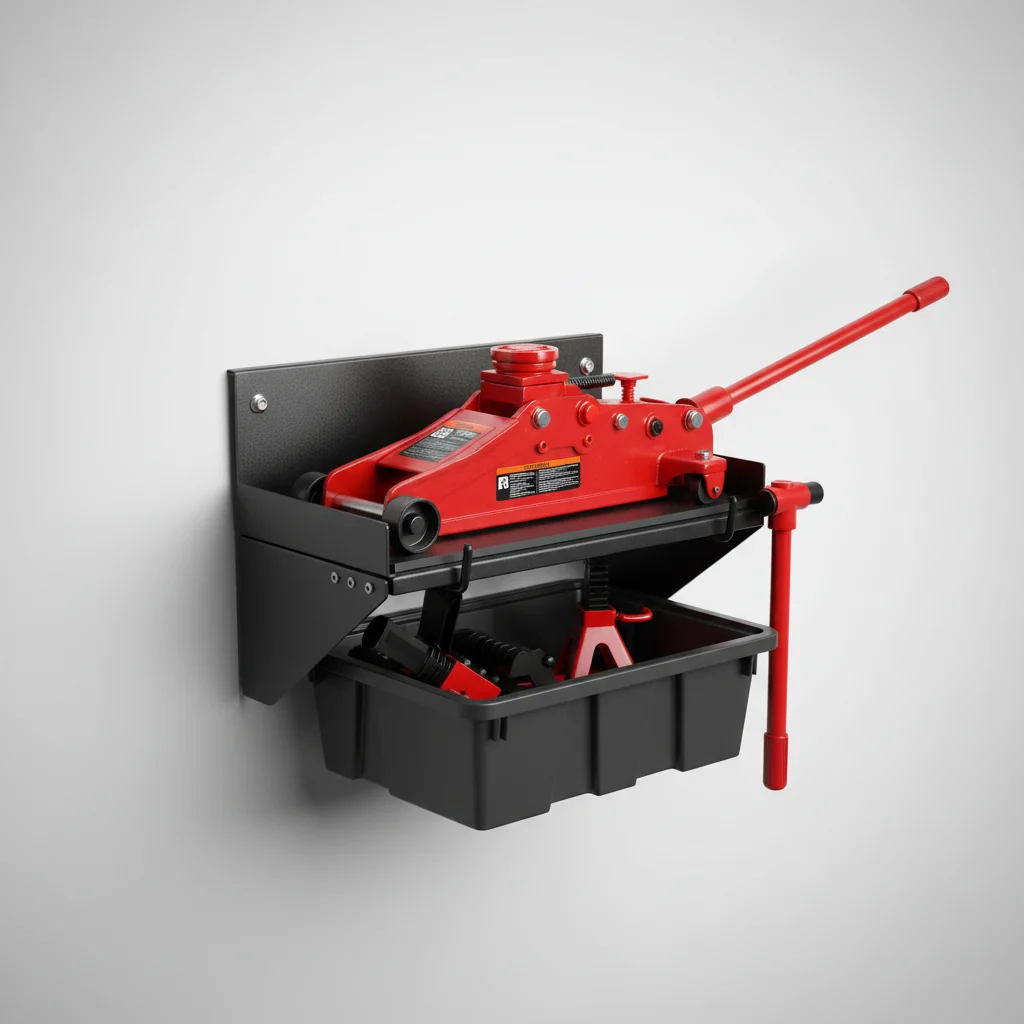
Proper floor jack storage is crucial for extending its lifespan and ensuring safe operation. The best way to store your floor jack is in a dry, level area, ideally on a concrete floor, to prevent moisture damage and maintain hydraulic integrity. This simple practice can add years to your equipment’s life and prevent unexpected failures.
Why Proper Storage Matters for Your Floor Jack
Storing your floor jack correctly isn’t just about keeping your garage tidy; it’s about preserving the delicate hydraulic system and preventing corrosion. Exposure to extreme temperatures, humidity, or uneven surfaces can lead to seal degradation, fluid leaks, and rust formation, all of which compromise the jack’s performance and safety. A well-maintained jack is a safe jack. For more automotive lifting guides on this site.
Ideal Environment for Floor Jack Storage
The optimal storage environment for any hydraulic floor jack is a cool, dry place with stable temperatures. Avoid storing it in areas prone to significant temperature fluctuations, such as uninsulated sheds or directly exposed to sunlight. Concrete floors are preferable to dirt or gravel, which can introduce moisture and debris into the mechanism. Always ensure the jack is fully lowered and clean before storage.
- Store in a dry, climate-controlled area.
- Keep the jack fully lowered to relieve pressure.
- Clean off dirt, grease, and debris before storing.
- Avoid direct sunlight and extreme temperatures.
- Place on a level, solid surface like concrete.
Preparing Your Floor Jack for Long-Term Storage
|
Our Picks for the Best Floor Jack in 2026
As an Amazon Associate I earn from qualifying purchases.
|
||
| Num | Product | Action |
|---|---|---|
| 1 | DNA Motoring TOOLS-00234 Low Profile Hydraulic Trolley Service/Floor Jack, 2 Ton (4000 lbs) Capacity, Lifting Range 5.1"-13", Black |

|
| 2 | Amazon Basics Hydraulic Floor and Portable Car Jack, 2.2 Short Ton/ 2 Metric Ton/ 2 Tonne / 2000 kg Capacity, Slow Release, Red |
|
| 3 | Floor Jack 2.5 Ton (5500 lbs), Low Profile Floor Jack with Single Piston Pump, Heavy Duty Steel Hydraulic Jack for Car, Jack for Car with Lifting Range 3.4'' to 14.6'' |
|
| 4 | VEVOR 2.5 Ton Low Profile, Heavy-Duty Steel Racing Floor Jack with Single Piston Lift Pump, Lifting Range 3.35"-14.96" |
|
| 5 | DNA Motoring Low Profile Hydraulic Trolley Service/Floor Jack, 2 Ton (4000 lbs) Capacity, Lifting Range 5.1"-13", Blue, TOOLS-00474 |
|
| 6 | Floor Jack 3 Ton Capacity Fast Lift Service Jack Steel Heavy Duty Hydraulic Car Jack |
|
| 7 | Dewalt DWHT83550 TOUGHSERIES Construction Jack |
|
| 8 | 3 Ton Low Profile, Aluminum and Steel Racing Floor Jack with Dual Pistons Quick Lift Pump for Sport Utility Vehicle, Lifting Range 3-15/16" min to 18-5/16" max, Net Weight 58.5 lb, Red |
|
| 9 | Low Profile Floor Jack 3 Ton (6600 lbs), Heavy Duty Hydraulic Jack for Car, Heavy-Duty Floor Jack with Dual Pistons Quick Lift Pump, Car Floor Jack with Lifting Range 3-1/8'' to 19-7/8'' |
|
| 10 | 3 Ton Floor Jack (6600 lbs), Heavy Duty Hydraulic Jack for Car, Heavy-Duty Floor Jack with Single Piston Pump, Quick Lift Car Jack 3 ton with Lifting Range 5.5'' to 18.5'' |
|
Before putting your floor jack away for an extended period, a few preparatory steps can make a big difference. First, thoroughly clean the entire jack, removing any dirt, oil, or grime. Inspect for any signs of damage or leaks. If you notice any issues, address them before storage. Finally, ensure the jack is fully lowered to its minimum height to relieve pressure on the hydraulic system. This prevents unnecessary strain on seals and internal components.
Common Storage Mistakes to Avoid
Many mechanics, both DIY and professional, make common storage mistakes that can shorten their floor jack’s life. One frequent error is storing the jack in an upright or tilted position, which can cause hydraulic fluid to shift and potentially lead to air entering the system or uneven lubrication. Another mistake is leaving the jack partially raised, which keeps the hydraulic system under constant pressure. Always store it flat and fully lowered.
Maintenance Tips for Stored Floor Jacks
Even when stored, your floor jack benefits from occasional checks. Every few months, it’s a good practice to briefly operate the jack, raising and lowering it a few times to circulate the hydraulic fluid and keep the seals lubricated. This simple action can prevent seals from drying out and cracking, which is a common cause of leaks. Also, wipe down any exposed metal parts with a light coat of oil to prevent rust.
The Impact of Proper Storage on Jack Longevity
Investing a small amount of time in proper floor jack storage can significantly impact its longevity and reliability. A jack that is consistently stored correctly will require less frequent maintenance and repairs, saving you time and money in the long run. More importantly, a well-maintained and properly stored jack is a safer tool to use, reducing the risk of accidents during vehicle maintenance.

This really hit home for me. I had a floor jack fail unexpectedly last year, and it was probably due to poor storage. Now I make sure it’s in a cool, dry place as recommended. It’s a small change that makes a big difference in preventing those unexpected failures and keeping my equipment safe.
Good advice here. I always knew moisture was bad, but the part about uneven surfaces causing seal degradation was new to me. I’ve started storing my jack in a dedicated spot now, away from the door where it gets damp. My old jack probably suffered from that. Wish I’d known this sooner.
I used to just leave my floor jack wherever it landed in the garage, but after reading about hydraulic integrity, I’ve been much more careful. Keeping it on a level concrete floor has made a noticeable difference. It feels smoother and I’m not worried about leaks anymore. Definitely a simple practice that pays off.
I try to keep my floor jack in a dry spot, but my garage is pretty humid in the summer. I’ve noticed some rust forming despite my best efforts. The advice about stable temperatures is hard to follow without a climate-controlled space. It’s better than nothing, but not a perfect solution for everyone.