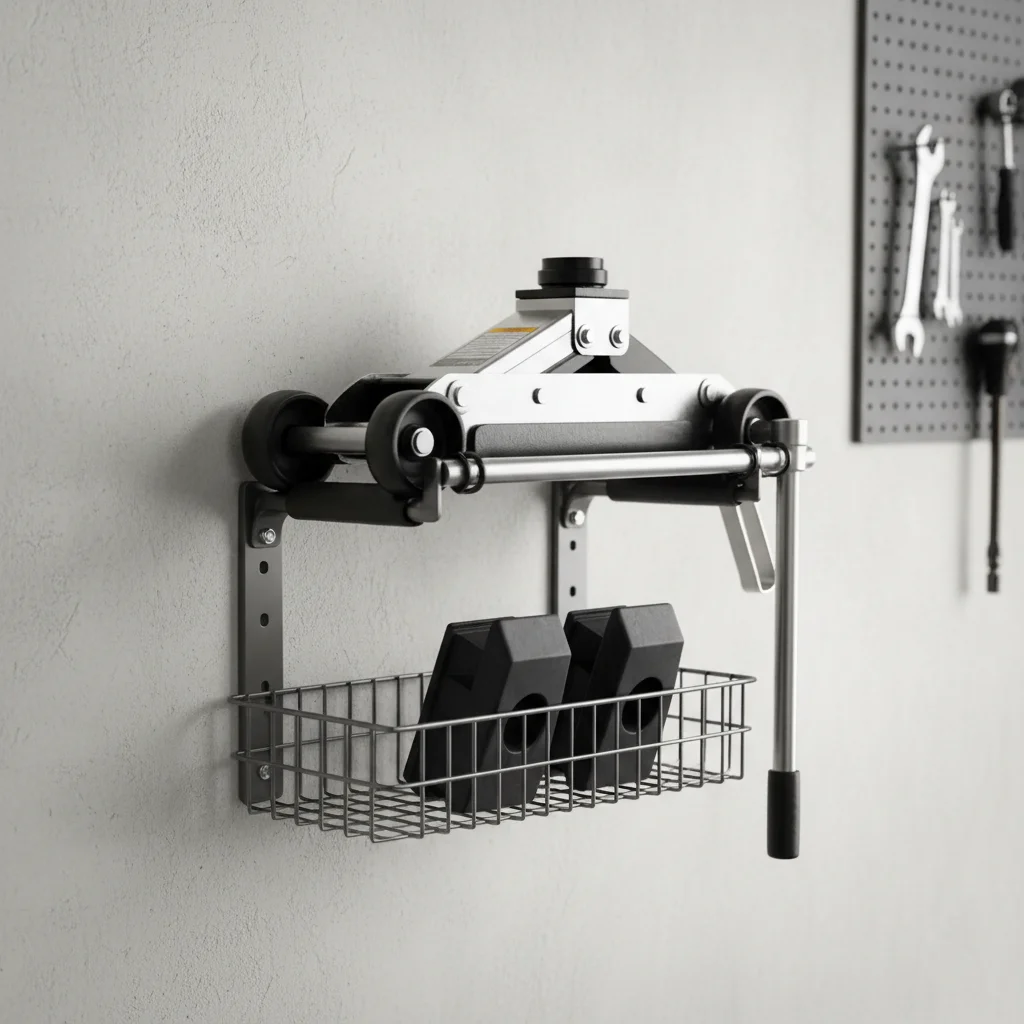
Proper floor jack storage is crucial for extending its lifespan and ensuring safety. The best way to store a floor jack is in a dry, level location, fully lowered, and with its handle detached or in the upright position. This prevents seal damage, corrosion, and accidental spills of hydraulic fluid. Following these guidelines can add years to your equipment’s service life and maintain its operational integrity.
Why Proper Storage Matters for Floor Jacks
Improper storage can lead to a host of problems for your floor jack. Leaving a jack in an elevated position for extended periods puts unnecessary stress on the hydraulic seals, which can lead to premature wear and fluid leaks. Exposure to moisture, whether from humidity or direct water contact, can cause rust on critical components like the ram, pump, and wheels, compromising the jack’s structural integrity and smooth operation. Furthermore, storing a jack in a cluttered or unstable area increases the risk of it being knocked over, potentially damaging the unit or causing injury.
Optimal Storage Locations and Conditions
The ideal storage location for a floor jack is a garage, workshop, or shed that offers a stable, dry, and relatively clean environment. Avoid areas prone to significant temperature fluctuations, as extreme heat or cold can affect hydraulic fluid viscosity and seal performance. A concrete floor is preferable to dirt or gravel, which can introduce contaminants into the jack’s mechanisms. If storing in a shed without a concrete floor, place the jack on a sturdy pallet or a thick piece of plywood to keep it off the ground and away from moisture. Ensure the area is free from corrosive chemicals or excessive dust.
Preparing Your Floor Jack for Storage
|
Our Picks for the Best Floor Jack in 2026
As an Amazon Associate I earn from qualifying purchases.
|
||
| Num | Product | Action |
|---|---|---|
| 1 | 3 Ton Floor Jack (6600 lbs), Heavy Duty Hydraulic Jack for Car, Heavy-Duty Floor Jack with Single Piston Pump, Quick Lift Car Jack 3 ton with Lifting Range 5.5'' to 18.5'' |

|
| 2 | VEVOR 2.5 Ton Low Profile, Heavy-Duty Steel Racing Floor Jack with Single Piston Lift Pump, Lifting Range 3.35"-14.96" |
|
| 3 | Dewalt DWHT83550 TOUGHSERIES Construction Jack |
|
| 4 | DNA Motoring Low Profile Hydraulic Trolley Service/Floor Jack, 2 Ton (4000 lbs) Capacity, Lifting Range 5.1"-13", Blue, TOOLS-00474 |
|
| 5 | Floor Jack 2.5 Ton (5500 lbs), Low Profile Floor Jack with Single Piston Pump, Heavy Duty Steel Hydraulic Jack for Car, Jack for Car with Lifting Range 3.4'' to 14.6'' |
|
| 6 | Floor Jack 3 Ton Capacity Fast Lift Service Jack Steel Heavy Duty Hydraulic Car Jack |
|
| 7 | Amazon Basics Hydraulic Floor and Portable Car Jack, 2.2 Short Ton/ 2 Metric Ton/ 2 Tonne / 2000 kg Capacity, Slow Release, Red |
|
| 8 | Low Profile Floor Jack 3 Ton (6600 lbs), Heavy Duty Hydraulic Jack for Car, Heavy-Duty Floor Jack with Dual Pistons Quick Lift Pump, Car Floor Jack with Lifting Range 3-1/8'' to 19-7/8'' |
|
| 9 | 3 Ton Low Profile, Aluminum and Steel Racing Floor Jack with Dual Pistons Quick Lift Pump for Sport Utility Vehicle, Lifting Range 3-15/16" min to 18-5/16" max, Net Weight 58.5 lb, Red |
|
| 10 | DNA Motoring TOOLS-00234 Low Profile Hydraulic Trolley Service/Floor Jack, 2 Ton (4000 lbs) Capacity, Lifting Range 5.1"-13", Black |
|
Before storing your floor jack, a few simple steps can significantly enhance its longevity. First, ensure the jack is completely lowered. This relieves pressure on the hydraulic system and prevents seals from being stretched or compressed unnecessarily. Next, clean the jack thoroughly. Wipe down any dirt, grease, or fluid residue from the frame, wheels, and lifting arm. A light coat of rust-preventative spray on exposed metal parts, especially the ram, can offer an extra layer of protection against corrosion. Finally, check the hydraulic fluid level and top it off if necessary, ensuring no air is trapped in the system.
- Completely lower the jack to relieve hydraulic pressure.
- Clean all surfaces to remove dirt, grease, and fluid.
- Apply a thin layer of rust-preventative oil to exposed metal.
- Inspect for any leaks or damage before long-term storage.
- Store the handle separately or in its designated upright position.
Handling the Floor Jack Handle During Storage
The handle of a floor jack often gets overlooked during storage, but its proper management is important. Many floor jacks feature a two-piece handle that can be easily disassembled. For long-term storage, detaching the handle and storing it alongside the jack can save space and prevent it from being bent or damaged. If your jack has a single-piece handle or a design where detachment isn’t practical, ensure it is stored in its fully upright position, secured by any retaining clips or pins. This prevents the handle from becoming a tripping hazard or from accidentally engaging the pump mechanism.
Long-Term Storage Considerations
For floor jacks that will be stored for several months or longer, consider a few additional precautions. If possible, cover the jack with a breathable tarp or a heavy-duty plastic sheet to protect it from dust and environmental contaminants. This is especially important in dusty workshops or sheds. Periodically, perhaps every few months, it’s beneficial to briefly operate the jack by lifting and lowering it a few times. This helps to circulate the hydraulic fluid and keep the seals lubricated, preventing them from drying out and cracking. Always ensure the jack is fully lowered again before returning it to long-term storage.For heavy-duty professional jacks, consider a dedicated storage cart or cabinet to protect your investment.
