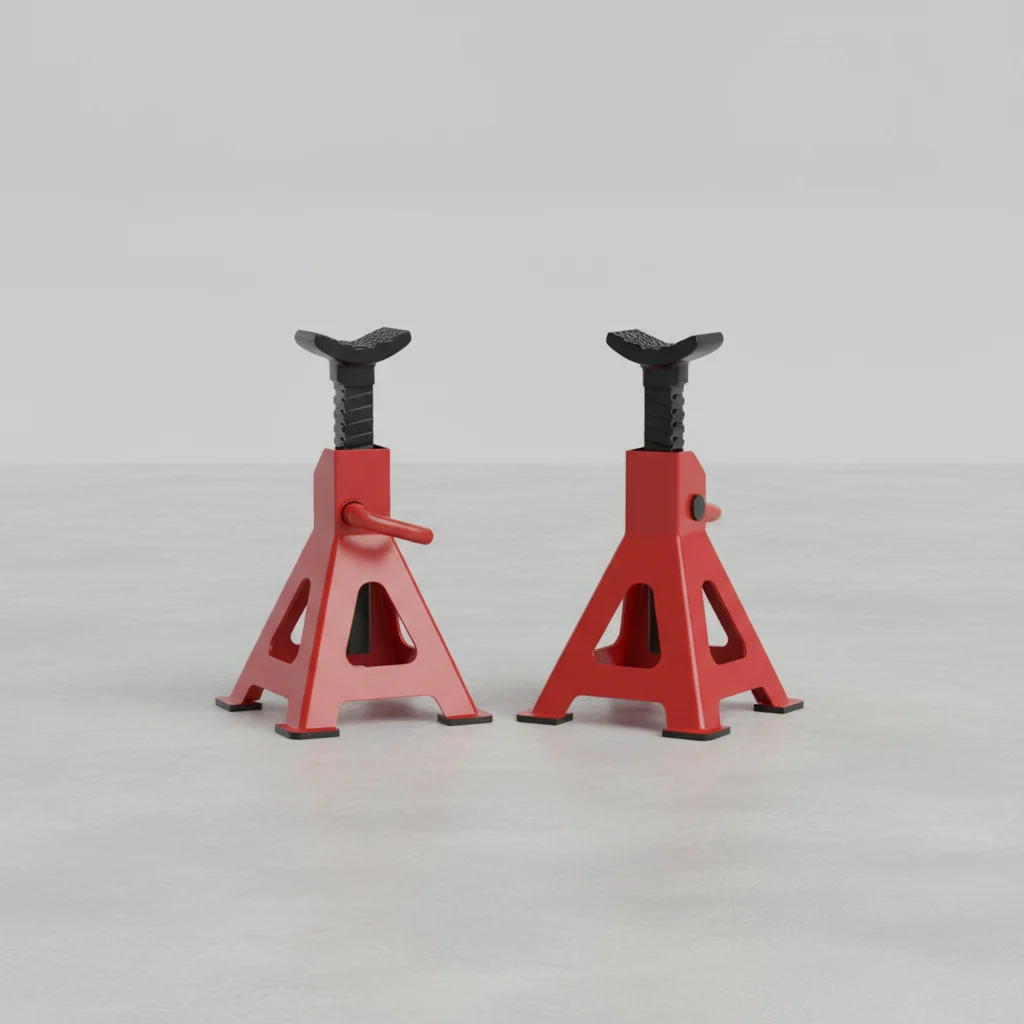
Floor jack stands are not just recommended, they are absolutely essential for anyone working under a vehicle. Relying solely on a floor jack, even for a short period, is extremely dangerous due to the inherent risk of hydraulic failure or accidental release. Using jack stands provides a stable, mechanical support system that prevents the vehicle from falling, ensuring your safety during maintenance or repairs.
Why Floor Jacks Alone Are Insufficient
A floor jack is designed for lifting, not for sustained support. Its hydraulic system, while robust, can fail due to leaks, seal degradation, or even a sudden jolt. If a jack fails while you’re underneath a vehicle, the consequences can be catastrophic. Jack stands, on the other hand, are built with a solid, mechanical locking mechanism that cannot fail in the same way. They provide a redundant safety measure that is non-negotiable for any under-car work.
Choosing the Right Jack Stands
Selecting the correct jack stands involves matching their weight capacity to your vehicle’s weight. Always choose stands with a capacity that exceeds the heaviest part of your vehicle you intend to support. For most passenger cars and light trucks, 3-ton or 6-ton jack stands are appropriate. Consider the base design as well; wider bases offer greater stability. Ratcheting stands are common and easy to adjust, while pin-style stands offer a more secure, fixed height.
- Always use jack stands on a flat, level, and solid surface.
- Position jack stands under the vehicle’s frame or designated jack points.
- Ensure both stands are at the same height and securely locked.
- Gently lower the vehicle onto the stands, confirming stability before working.
- Never exceed the rated weight capacity of your jack stands.
Proper Placement and Usage
|
Our Picks for the Best Floor Jack in 2026
As an Amazon Associate I earn from qualifying purchases.
|
||
| Num | Product | Action |
|---|---|---|
| 1 | VEVOR 2.5 Ton Low Profile, Heavy-Duty Steel Racing Floor Jack with Single Piston Lift Pump, Lifting Range 3.35"-14.96" |

|
| 2 | 3 Ton Floor Jack (6600 lbs), Heavy Duty Hydraulic Jack for Car, Heavy-Duty Floor Jack with Single Piston Pump, Quick Lift Car Jack 3 ton with Lifting Range 5.5'' to 18.5'' |
|
| 3 | Low Profile Floor Jack 3 Ton (6600 lbs), Heavy Duty Hydraulic Jack for Car, Heavy-Duty Floor Jack with Dual Pistons Quick Lift Pump, Car Floor Jack with Lifting Range 3-1/8'' to 19-7/8'' |
|
| 4 | Floor Jack 3 Ton Capacity Fast Lift Service Jack Steel Heavy Duty Hydraulic Car Jack |
|
| 5 | Floor Jack 2.5 Ton (5500 lbs), Low Profile Floor Jack with Single Piston Pump, Heavy Duty Steel Hydraulic Jack for Car, Jack for Car with Lifting Range 3.4'' to 14.6'' |
|
| 6 | Amazon Basics Hydraulic Floor and Portable Car Jack, 2.2 Short Ton/ 2 Metric Ton/ 2 Tonne / 2000 kg Capacity, Slow Release, Red |
|
| 7 | DNA Motoring TOOLS-00234 Low Profile Hydraulic Trolley Service/Floor Jack, 2 Ton (4000 lbs) Capacity, Lifting Range 5.1"-13", Black |
|
| 8 | DNA Motoring Low Profile Hydraulic Trolley Service/Floor Jack, 2 Ton (4000 lbs) Capacity, Lifting Range 5.1"-13", Blue, TOOLS-00474 |
|
| 9 | Dewalt DWHT83550 TOUGHSERIES Construction Jack |
|
| 10 | 3 Ton Low Profile, Aluminum and Steel Racing Floor Jack with Dual Pistons Quick Lift Pump for Sport Utility Vehicle, Lifting Range 3-15/16" min to 18-5/16" max, Net Weight 58.5 lb, Red |
|
Correct placement of jack stands is crucial. Refer to your vehicle’s owner’s manual for the manufacturer-recommended jack points. These are typically reinforced areas designed to safely bear the vehicle’s weight. Once the vehicle is lifted with a floor jack, position the stands under these points, ensuring they are stable and level. Slowly lower the vehicle onto the stands, making sure the weight is evenly distributed and the stands are firmly seated. A slight rock test can confirm stability before you begin working.
Maintaining Your Jack Stands
While jack stands require less maintenance than hydraulic jacks, periodic inspection is vital. Check for any signs of rust, bending, or cracks in the metal. Ensure the locking mechanisms (pins or ratchets) are clean and operate smoothly. Lubricate moving parts if necessary to prevent seizing. Properly maintained jack stands will provide reliable safety for many years.Investing in high-quality jack stands is an investment in your personal safety, and it’s a small price to pay for peace of mind.
