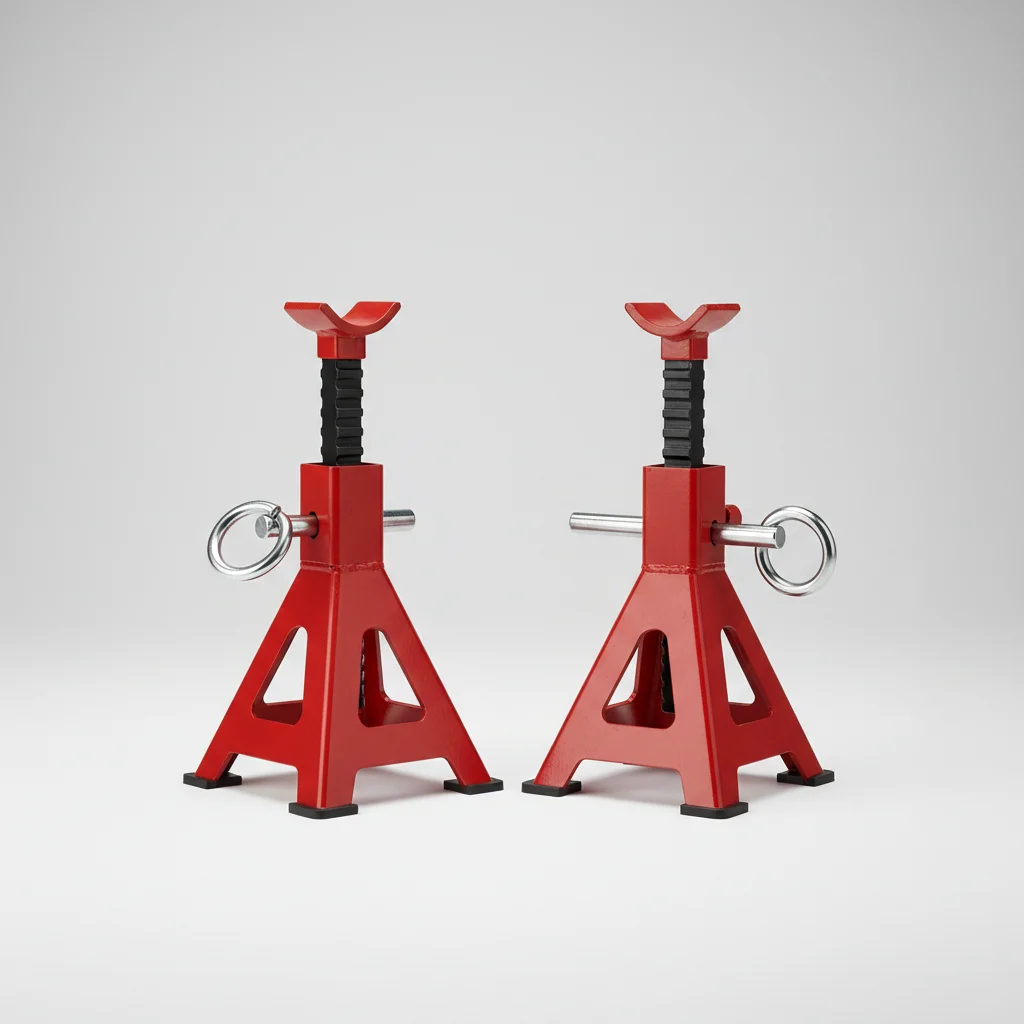
When working under a vehicle, the question of whether floor jack safety stands are truly necessary often arises. The unequivocal answer is yes, they are absolutely essential. Relying solely on a hydraulic floor jack, which can fail due to seal leaks or sudden pressure loss, is a grave safety risk. Safety stands provide a mechanical, redundant support system that prevents a catastrophic collapse, protecting you from serious injury or even death. Never work under a vehicle supported only by a jack.
The Critical Role of Jack Stands in Vehicle Maintenance
Jack stands are designed to bear the weight of a vehicle for extended periods, unlike floor jacks which are primarily for lifting. Their robust construction and locking mechanisms ensure stability once the vehicle is raised to the desired height. This redundancy is not just a recommendation; it’s a fundamental safety principle in automotive repair. Even the most expensive and well-maintained floor jack can fail, and when it does, the consequences can be dire. For shop curated automotive lifting on this site.
Using jack stands correctly involves placing them on a solid, level surface and positioning them under the vehicle’s designated support points, such as the frame rails or pinch welds, as specified in your vehicle’s owner’s manual. Always ensure the stands are fully engaged and locked before you begin any work under the car.
Types of Floor Jack Safety Stands and Their Features
There are several types of jack stands available, each with specific features. Ratchet-style stands are the most common, offering quick height adjustments and a secure locking pin. Pin-type stands provide maximum security with a solid pin inserted through the stand and post. Screw-type stands offer fine height adjustments but are less common for general automotive use. When selecting stands, consider their weight capacity, ensuring it exceeds the weight of your vehicle. A 3-ton capacity is a good all-around choice for most passenger cars and light trucks.
- Ratchet-style stands for quick and easy height adjustments.
- Pin-type stands offering superior security with a solid locking pin.
- Tripod stands for uneven surfaces or specific vehicle support points.
- High-reach stands for lifted trucks and SUVs.
- Folding stands for compact storage in smaller garages.
Proper Placement and Usage for Maximum Safety
|
Our Picks for the Best Floor Jack in 2026
As an Amazon Associate I earn from qualifying purchases.
|
||
| Num | Product | Action |
|---|---|---|
| 1 | DNA Motoring Low Profile Hydraulic Trolley Service/Floor Jack, 2 Ton (4000 lbs) Capacity, Lifting Range 5.1"-13", Blue, TOOLS-00474 |

|
| 2 | 3 Ton Floor Jack (6600 lbs), Heavy Duty Hydraulic Jack for Car, Heavy-Duty Floor Jack with Single Piston Pump, Quick Lift Car Jack 3 ton with Lifting Range 5.5'' to 18.5'' |
|
| 3 | Low Profile Floor Jack 3 Ton (6600 lbs), Heavy Duty Hydraulic Jack for Car, Heavy-Duty Floor Jack with Dual Pistons Quick Lift Pump, Car Floor Jack with Lifting Range 3-1/8'' to 19-7/8'' |
|
| 4 | Floor Jack 3 Ton Capacity Fast Lift Service Jack Steel Heavy Duty Hydraulic Car Jack |
|
| 5 | Floor Jack 2.5 Ton (5500 lbs), Low Profile Floor Jack with Single Piston Pump, Heavy Duty Steel Hydraulic Jack for Car, Jack for Car with Lifting Range 3.4'' to 14.6'' |
|
| 6 | 3 Ton Low Profile, Aluminum and Steel Racing Floor Jack with Dual Pistons Quick Lift Pump for Sport Utility Vehicle, Lifting Range 3-15/16" min to 18-5/16" max, Net Weight 58.5 lb, Red |
|
| 7 | DNA Motoring TOOLS-00234 Low Profile Hydraulic Trolley Service/Floor Jack, 2 Ton (4000 lbs) Capacity, Lifting Range 5.1"-13", Black |
|
| 8 | Amazon Basics Hydraulic Floor and Portable Car Jack, 2.2 Short Ton/ 2 Metric Ton/ 2 Tonne / 2000 kg Capacity, Slow Release, Red |
|
| 9 | VEVOR 2.5 Ton Low Profile, Heavy-Duty Steel Racing Floor Jack with Single Piston Lift Pump, Lifting Range 3.35"-14.96" |
|
| 10 | Dewalt DWHT83550 TOUGHSERIES Construction Jack |
|
Correct placement of floor jack safety stands is paramount. After lifting the vehicle with your floor jack, position the stands under the vehicle’s frame or designated jack points. Slowly lower the vehicle onto the stands, ensuring the weight is evenly distributed and the stands are stable. Give the vehicle a gentle shake to confirm its stability before getting underneath. Always use at least two stands, and ideally four, for comprehensive support. Never place stands on soft ground, asphalt on a hot day, or any surface that could compromise their stability.
Common Mistakes to Avoid When Using Jack Stands
One of the most common mistakes is using inadequate capacity stands for the vehicle’s weight. Another is failing to place them on a firm, level surface. Never use bricks, wood blocks, or other makeshift supports in place of proper jack stands. Additionally, avoid placing stands on suspension components that could shift or collapse. Always consult your vehicle’s owner’s manual for specific jacking and support points. Overlooking these details can lead to serious accidents.
Another critical error is not fully engaging the locking mechanism on ratchet-style stands or failing to insert the pin on pin-type stands. A partially engaged stand is a ticking time bomb. Double-check all connections and ensure the stands are firmly seated before beginning any work.
Maintaining Your Safety Stands for Longevity
While jack stands are relatively low-maintenance, a few practices can ensure their longevity and continued safety. Regularly inspect them for any signs of damage, such as bent legs, cracked welds, or corrosion. Keep the adjustment mechanisms clean and free of debris. Store them in a dry place to prevent rust. If you notice any significant damage, it’s safer to replace them than to risk a failure. A small investment in new stands is always preferable to a major accident.
In conclusion, floor jack safety stands are not an optional accessory but a non-negotiable safety device for anyone working under a vehicle. Their role in preventing accidents is critical, providing a secure, mechanical backup to your hydraulic jack. Always use them, use them correctly, and inspect them regularly to ensure your safety in the garage.
