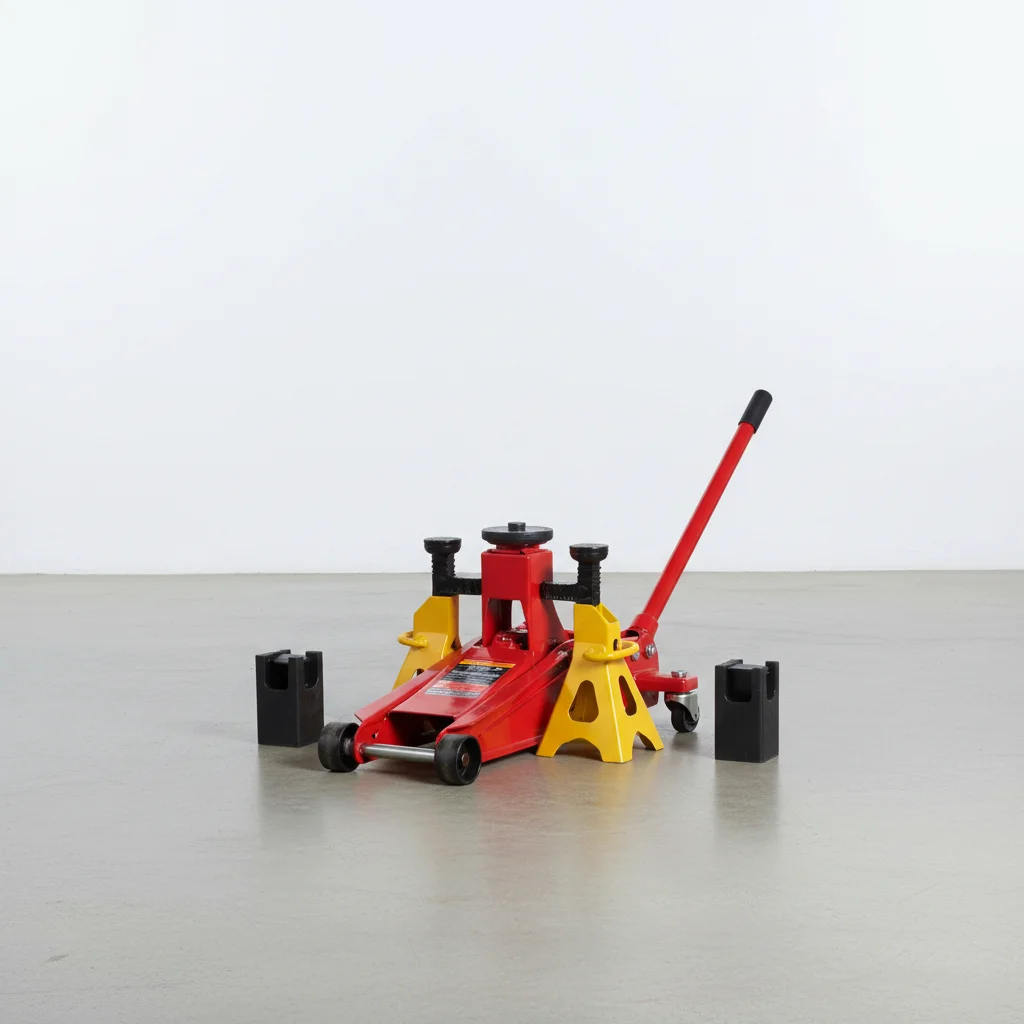
Preventing accidental lowering of a floor jack is crucial for safety in any garage. The most effective way to prevent this is by always using jack stands in conjunction with your floor jack, ensuring the vehicle is securely supported before any work begins. This dual-support system provides a critical failsafe against hydraulic failure or mechanical slippage, which can lead to severe injury or even death.
Understanding Floor Jack Mechanisms and Failure Points
Floor jacks operate on hydraulic principles, using an incompressible fluid to multiply force. While robust, these systems can fail due to worn seals, contaminated fluid, or internal valve issues. A common failure point is the release valve, which, if faulty or improperly engaged, can allow the jack to lower unexpectedly. Regular inspection of your jack’s hydraulic system and seals is vital to identify potential problems before they become critical.
Another area of concern is the saddle and lifting arm. Over time, these components can wear, especially if the jack is frequently used beyond its rated capacity. Always ensure the saddle makes full, stable contact with the vehicle’s lifting point. Any wobbling or instability during the lift indicates a potential issue that needs immediate attention.
The Indispensable Role of Jack Stands
Jack stands are designed to mechanically support a vehicle’s weight, completely independent of the floor jack’s hydraulic system. Once the vehicle is lifted to the desired height with the floor jack, position the jack stands under a strong, load-bearing part of the vehicle’s frame or designated lifting points. Lower the vehicle slowly onto the jack stands until they bear the full weight. This step is non-negotiable for anyone working under a vehicle.
When selecting jack stands, ensure they have a weight capacity that exceeds the vehicle’s weight. Look for models with wide bases for stability and a robust locking mechanism, such as a pin-style or ratchet-style lock. Always use two jack stands for most applications, placed symmetrically to distribute the load evenly.
Proper Lifting Techniques and Placement
|
Our Picks for the Best Floor Jack in 2026
As an Amazon Associate I earn from qualifying purchases.
|
||
| Num | Product | Action |
|---|---|---|
| 1 | 3 Ton Low Profile, Aluminum and Steel Racing Floor Jack with Dual Pistons Quick Lift Pump for Sport Utility Vehicle, Lifting Range 3-15/16" min to 18-5/16" max, Net Weight 58.5 lb, Red |

|
| 2 | Dewalt DWHT83550 TOUGHSERIES Construction Jack |
|
| 3 | Low Profile Floor Jack 3 Ton (6600 lbs), Heavy Duty Hydraulic Jack for Car, Heavy-Duty Floor Jack with Dual Pistons Quick Lift Pump, Car Floor Jack with Lifting Range 3-1/8'' to 19-7/8'' |
|
| 4 | Floor Jack 3 Ton Capacity Fast Lift Service Jack Steel Heavy Duty Hydraulic Car Jack |
|
| 5 | VEVOR 2.5 Ton Low Profile, Heavy-Duty Steel Racing Floor Jack with Single Piston Lift Pump, Lifting Range 3.35"-14.96" |
|
| 6 | DNA Motoring Low Profile Hydraulic Trolley Service/Floor Jack, 2 Ton (4000 lbs) Capacity, Lifting Range 5.1"-13", Blue, TOOLS-00474 |
|
| 7 | 3 Ton Floor Jack (6600 lbs), Heavy Duty Hydraulic Jack for Car, Heavy-Duty Floor Jack with Single Piston Pump, Quick Lift Car Jack 3 ton with Lifting Range 5.5'' to 18.5'' |
|
| 8 | Amazon Basics Hydraulic Floor and Portable Car Jack, 2.2 Short Ton/ 2 Metric Ton/ 2 Tonne / 2000 kg Capacity, Slow Release, Red |
|
| 9 | Floor Jack 2.5 Ton (5500 lbs), Low Profile Floor Jack with Single Piston Pump, Heavy Duty Steel Hydraulic Jack for Car, Jack for Car with Lifting Range 3.4'' to 14.6'' |
|
| 10 | DNA Motoring TOOLS-00234 Low Profile Hydraulic Trolley Service/Floor Jack, 2 Ton (4000 lbs) Capacity, Lifting Range 5.1"-13", Black |
|
Correct placement of both the floor jack and jack stands is paramount. Consult your vehicle’s owner’s manual for the manufacturer-recommended lifting points. Using incorrect points can damage the vehicle or cause it to slip off the jack. For the floor jack, aim for a solid frame rail or a reinforced jacking point. For jack stands, target sturdy frame components or axle housing, avoiding suspension arms or thin sheet metal.
Before lifting, ensure the floor jack is on a flat, level, and solid surface. Never use a floor jack on dirt, gravel, or uneven pavement, as this can cause the jack to sink or tip. If working on an asphalt driveway in hot weather, consider placing a piece of plywood under the jack to prevent it from sinking into the softened surface.
Regular Maintenance for Enhanced Safety
Consistent maintenance of your floor jack is key to its safe operation. This includes checking the hydraulic fluid level and condition, inspecting for leaks around seals and fittings, and ensuring all moving parts are clean and lubricated. A well-maintained jack is less likely to experience sudden failures.
- Inspect hydraulic fluid for clarity and proper level.
- Check all seals and hoses for any signs of leaks or cracks.
- Lubricate pivot points and wheels to ensure smooth operation.
- Test the release valve for smooth and controlled lowering.
- Clean the jack thoroughly after each use to prevent dirt and debris buildup.
Emergency Preparedness and Best Practices
Even with all precautions, accidents can happen. Always have a plan for what to do if a jack fails. Never place any part of your body under a vehicle that is only supported by a floor jack. Keep a clear workspace around the vehicle to avoid tripping hazards. Consider investing in a high-quality floor jack and jack stands from reputable brands.
For added security, some mechanics also use wheel chocks on the wheels that remain on the ground, especially when working on an incline or if only one end of the vehicle is lifted. This prevents the vehicle from rolling. Always double-check all connections and supports before beginning any work under the vehicle. Your safety is worth the extra few minutes of preparation.

I’ve been using floor jacks for years, and the advice about always using jack stands is spot on. It’s easy to get complacent, but that dual-support system is a lifesaver. I had a close call once with an older jack that started to creep, and ever since then, I never work under a car without stands. Great reminder for everyone.
Good info here, especially about inspecting the hydraulic system. I usually just check for leaks, but thinking about worn seals and internal valve issues makes me want to be more thorough. My current jack is pretty new, but I’ll definitely keep an eye on the release valve as it ages. Safety first, always.
While I agree with the importance of jack stands, I wish there was more detail on specific brands or types of jacks that have better safety features built-in. It’s hard to know which ones are truly robust just from general advice. My old jack had a slow leak, and it was a pain to deal with.
This really hit home about understanding the hydraulic principles. I always knew how they worked generally, but the explanation of incompressible fluid and force multiplication was clear. It makes you appreciate the engineering and also respect the potential for failure if not maintained. Solid advice for any mechanic, DIY or pro.