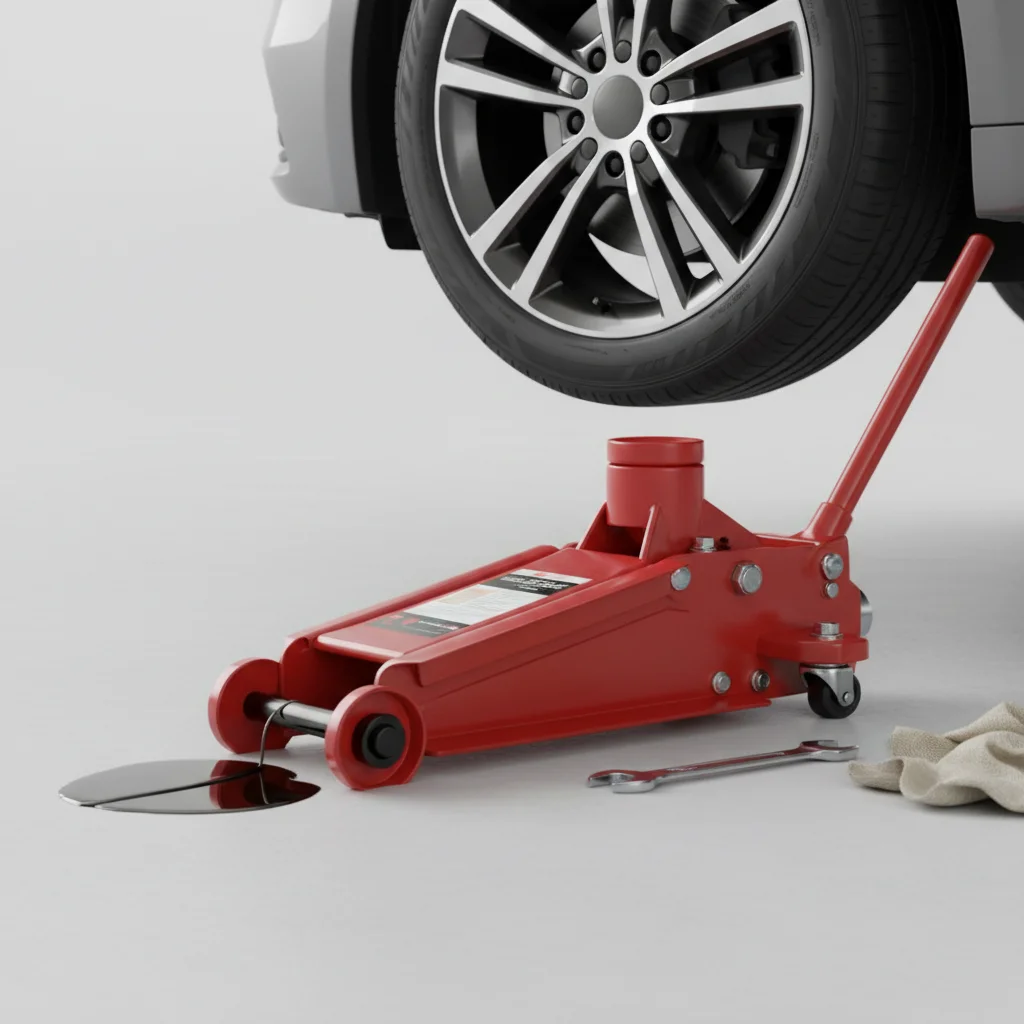
When your floor jack refuses to lower, it’s typically due to one of five common issues: a closed release valve, air in the hydraulic system, a clogged relief valve, low hydraulic fluid, or a damaged seal. Addressing these problems usually involves a straightforward troubleshooting process that can restore your jack’s functionality.
Check the Release Valve Position
The most frequent reason a floor jack won’t lower is simply that the release valve isn’t fully open. This valve, often a screw or lever, controls the flow of hydraulic fluid back into the reservoir. Ensure it’s turned counter-clockwise or moved to the ‘down’ position as far as it will go. Sometimes, it might feel open but still be partially engaged, preventing the fluid from returning and the jack from descending. Always double-check this first before moving on to more complex diagnostics.
Bleed Air from the Hydraulic System
Air trapped within the hydraulic system can create a ‘spongy’ feel or prevent the jack from lowering properly. This air can enter through various means, such as during a fluid change or if the jack is stored improperly. To bleed the system, open the release valve completely, remove the oil filler plug, and pump the handle several times. This action forces trapped air out. Once complete, close the release valve, replace the filler plug, and test the jack’s operation. You may need to repeat this process a couple of times to ensure all air is expelled.
Inspect for a Clogged Relief Valve
|
Our Picks for the Best Floor Jack in 2026
As an Amazon Associate I earn from qualifying purchases.
|
||
| Num | Product | Action |
|---|---|---|
| 1 | Amazon Basics Hydraulic Floor and Portable Car Jack, 2.2 Short Ton/ 2 Metric Ton/ 2 Tonne / 2000 kg Capacity, Slow Release, Red |

|
| 2 | DNA Motoring TOOLS-00234 Low Profile Hydraulic Trolley Service/Floor Jack, 2 Ton (4000 lbs) Capacity, Lifting Range 5.1"-13", Black |
|
| 3 | Floor Jack 2.5 Ton (5500 lbs), Low Profile Floor Jack with Single Piston Pump, Heavy Duty Steel Hydraulic Jack for Car, Jack for Car with Lifting Range 3.4'' to 14.6'' |
|
| 4 | Floor Jack 3 Ton Capacity Fast Lift Service Jack Steel Heavy Duty Hydraulic Car Jack |
|
| 5 | VEVOR 2.5 Ton Low Profile, Heavy-Duty Steel Racing Floor Jack with Single Piston Lift Pump, Lifting Range 3.35"-14.96" |
|
| 6 | DNA Motoring Low Profile Hydraulic Trolley Service/Floor Jack, 2 Ton (4000 lbs) Capacity, Lifting Range 5.1"-13", Blue, TOOLS-00474 |
|
| 7 | Low Profile Floor Jack 3 Ton (6600 lbs), Heavy Duty Hydraulic Jack for Car, Heavy-Duty Floor Jack with Dual Pistons Quick Lift Pump, Car Floor Jack with Lifting Range 3-1/8'' to 19-7/8'' |
|
| 8 | 3 Ton Floor Jack (6600 lbs), Heavy Duty Hydraulic Jack for Car, Heavy-Duty Floor Jack with Single Piston Pump, Quick Lift Car Jack 3 ton with Lifting Range 5.5'' to 18.5'' |
|
| 9 | Dewalt DWHT83550 TOUGHSERIES Construction Jack |
|
| 10 | 3 Ton Low Profile, Aluminum and Steel Racing Floor Jack with Dual Pistons Quick Lift Pump for Sport Utility Vehicle, Lifting Range 3-15/16" min to 18-5/16" max, Net Weight 58.5 lb, Red |
|
The relief valve is a safety mechanism designed to prevent over-pressurization. However, it can become clogged with debris or sludge over time, hindering the jack’s ability to lower. Locating and inspecting this valve, often a small ball bearing and spring assembly, is crucial. If it’s obstructed, carefully clean it with a suitable solvent and ensure it moves freely. Reassemble with care, making sure all components are correctly seated.
Verify Hydraulic Fluid Levels
Insufficient hydraulic fluid can also cause a floor jack to malfunction, including issues with lowering. If the fluid level is too low, there isn’t enough volume to properly operate the internal mechanisms. Check the fluid level by removing the filler plug with the jack fully lowered. The fluid should typically be just below the filler hole. If it’s low, top it off with the manufacturer-recommended hydraulic jack oil. Avoid overfilling, as this can also lead to problems. Always use the correct type of fluid to maintain the integrity of the seals and internal components.
Examine for Damaged Seals
While less common for a jack that simply won’t lower (it’s more often associated with fluid leaks or a jack that won’t hold a load), a severely damaged or worn seal within the release valve mechanism could prevent proper fluid return. If you’ve ruled out all other possibilities, a seal inspection might be necessary. This often requires disassembling part of the hydraulic cylinder, which can be more involved. If a seal is found to be compromised, it will need to be replaced. Consider consulting your jack’s manual or a professional if you’re unsure about this step.
- Always consult your floor jack’s owner’s manual for specific troubleshooting steps.
- Use only hydraulic jack oil for refills; never substitute with motor oil or brake fluid.
- Wear appropriate safety gear, including gloves and eye protection, when working with hydraulic fluid.
- Ensure the jack is on a level, stable surface before attempting any maintenance or repairs.
- If you are uncomfortable performing any of these steps, seek professional assistance.
