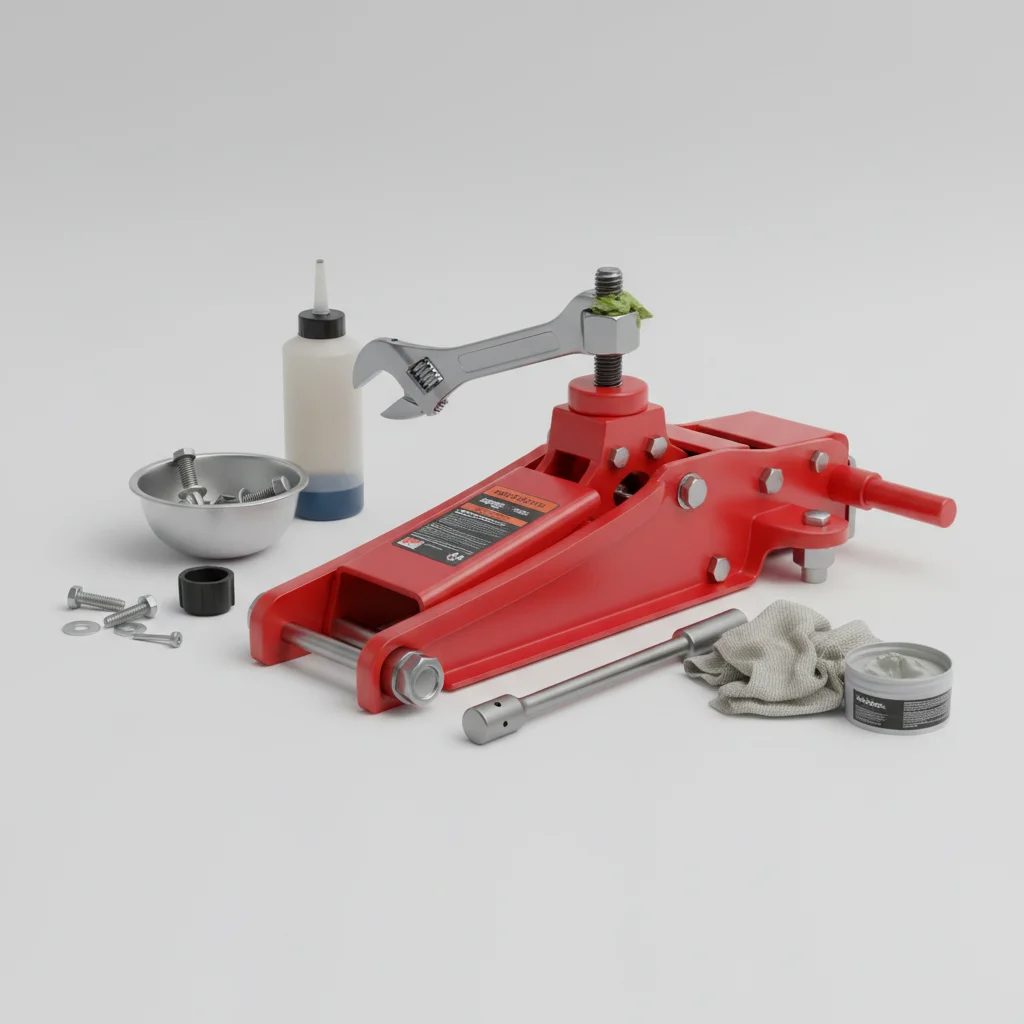
For optimal safety and performance, you should tighten your floor jack’s bolts at least once every six months, or more frequently if you use the jack daily or for heavy-duty applications. Loose bolts can compromise the structural integrity of the jack, leading to instability and potential failure during operation. Regular inspection and tightening are crucial steps in maintaining your equipment.
Why Regular Bolt Tightening is Essential for Floor Jack Safety
Floor jacks operate under immense pressure, lifting thousands of pounds. Over time, the vibrations and stresses from repeated use can cause bolts to loosen. A loose bolt on a critical component, such as the lifting arm or the base, can lead to dangerous instability. This instability might manifest as a wobble or a sudden shift, which could cause the vehicle to fall, resulting in severe injury or damage. Ensuring all bolts are securely fastened is a fundamental aspect of preventing accidents and extending the lifespan of your jack. For complete automotive lifting library on this site.
Identifying Which Bolts Need Attention
While it’s good practice to check all visible bolts, pay particular attention to those connecting the main components. These include the bolts securing the handle assembly, the lifting arm pivot points, the wheels or casters, and the base plate. Any bolt that experiences direct stress during the lifting and lowering process is a candidate for loosening. A visual inspection for rust or wear around the bolt heads can also indicate areas that require closer examination.
- Check bolts on the handle assembly for secure attachment.
- Inspect pivot point bolts on the lifting arm.
- Verify tightness of bolts securing wheels or casters.
- Examine base plate bolts for any signs of loosening.
- Look for any missing or damaged bolts and replace immediately.
The Right Tools and Torque for the Job
|
Our Picks for the Best Floor Jack in 2026
As an Amazon Associate I earn from qualifying purchases.
|
||
| Num | Product | Action |
|---|---|---|
| 1 | 3 Ton Low Profile, Aluminum and Steel Racing Floor Jack with Dual Pistons Quick Lift Pump for Sport Utility Vehicle, Lifting Range 3-15/16" min to 18-5/16" max, Net Weight 58.5 lb, Red |

|
| 2 | 3 Ton Floor Jack (6600 lbs), Heavy Duty Hydraulic Jack for Car, Heavy-Duty Floor Jack with Single Piston Pump, Quick Lift Car Jack 3 ton with Lifting Range 5.5'' to 18.5'' |
|
| 3 | Floor Jack 3 Ton Capacity Fast Lift Service Jack Steel Heavy Duty Hydraulic Car Jack |
|
| 4 | VEVOR 2.5 Ton Low Profile, Heavy-Duty Steel Racing Floor Jack with Single Piston Lift Pump, Lifting Range 3.35"-14.96" |
|
| 5 | Dewalt DWHT83550 TOUGHSERIES Construction Jack |
|
| 6 | Low Profile Floor Jack 3 Ton (6600 lbs), Heavy Duty Hydraulic Jack for Car, Heavy-Duty Floor Jack with Dual Pistons Quick Lift Pump, Car Floor Jack with Lifting Range 3-1/8'' to 19-7/8'' |
|
| 7 | DNA Motoring TOOLS-00234 Low Profile Hydraulic Trolley Service/Floor Jack, 2 Ton (4000 lbs) Capacity, Lifting Range 5.1"-13", Black |
|
| 8 | DNA Motoring Low Profile Hydraulic Trolley Service/Floor Jack, 2 Ton (4000 lbs) Capacity, Lifting Range 5.1"-13", Blue, TOOLS-00474 |
|
| 9 | Amazon Basics Hydraulic Floor and Portable Car Jack, 2.2 Short Ton/ 2 Metric Ton/ 2 Tonne / 2000 kg Capacity, Slow Release, Red |
|
| 10 | Floor Jack 2.5 Ton (5500 lbs), Low Profile Floor Jack with Single Piston Pump, Heavy Duty Steel Hydraulic Jack for Car, Jack for Car with Lifting Range 3.4'' to 14.6'' |
|
To properly tighten floor jack bolts, you’ll typically need a set of wrenches or a socket set. For critical structural bolts, using a torque wrench is highly recommended. While specific torque values can vary by manufacturer and model, a general guideline for most floor jack bolts is between 30-50 ft-lbs. Always consult your floor jack’s owner’s manual for precise torque specifications. Overtightening can strip threads or damage components, so precision is key.
When to Replace Instead of Just Tighten
Sometimes, a bolt may be too damaged to simply tighten. If you notice stripped threads, a bent bolt, or significant corrosion, the bolt should be replaced immediately. Using damaged bolts can lead to catastrophic failure. It’s also wise to replace any missing bolts promptly. Many manufacturers offer replacement bolt kits, or you can source appropriate hardware from a reputable supplier, ensuring the replacement bolts match the original in grade and size.
Establishing a Maintenance Schedule for Your Floor Jack
Beyond bolt tightening, a comprehensive maintenance schedule for your floor jack should include checking hydraulic fluid levels, inspecting for leaks, lubricating moving parts, and cleaning the jack regularly. For DIY mechanics, a bi-annual check is usually sufficient. Professional mechanics using their jacks daily might consider monthly or quarterly inspections. Consistent maintenance not only ensures safety but also significantly extends the operational life of your valuable equipment.
