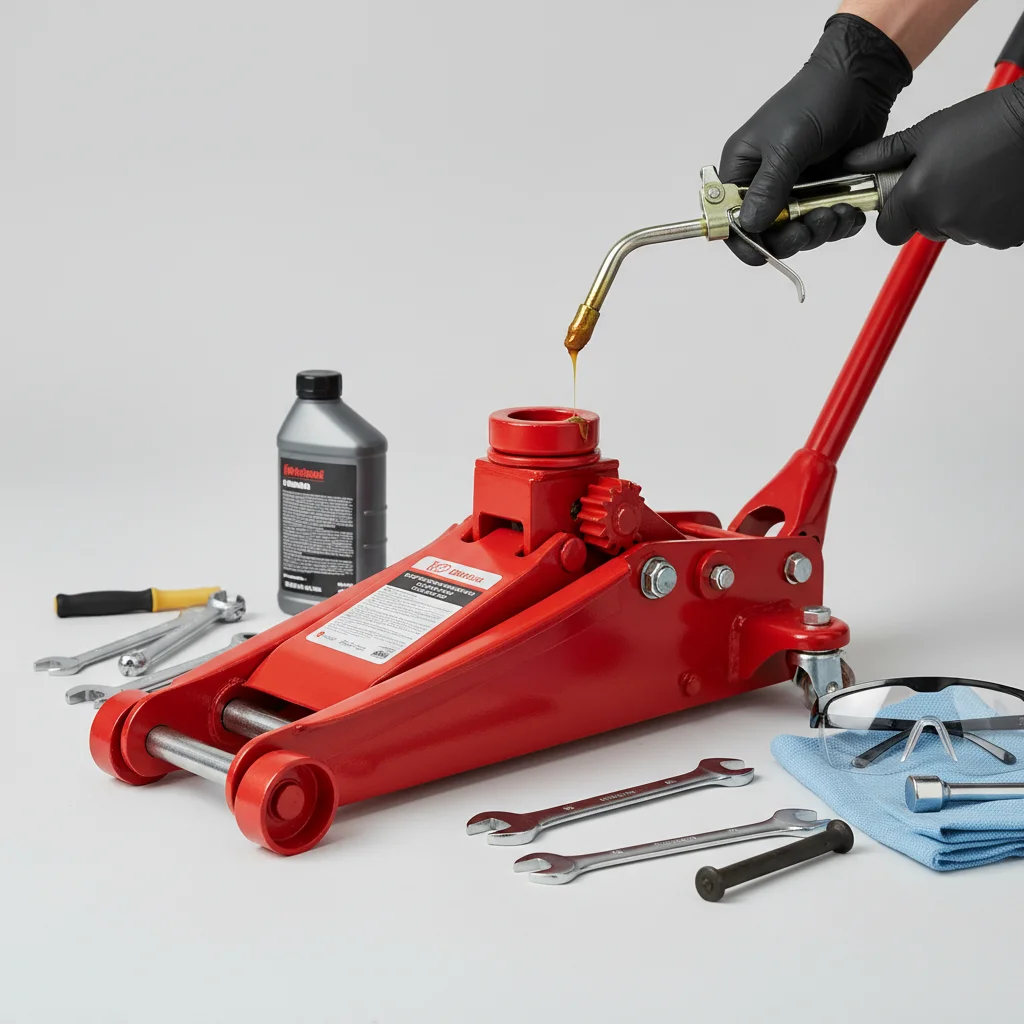
Proper floor jack maintenance is crucial for safety and longevity. You should lubricate your floor jack’s moving parts at least once every three to six months, or more frequently if it sees heavy use or is exposed to harsh conditions. This regular lubrication prevents rust, reduces friction, and ensures smooth operation, significantly extending the life of your equipment and maintaining its reliability.
Why Regular Lubrication is Essential for Your Floor Jack
Lubricating your floor jack isn’t just about preventing squeaks; it’s a critical safety measure. Metal-on-metal friction without adequate lubrication can lead to premature wear, component failure, and even catastrophic accidents. Over time, dust, dirt, and moisture can accumulate on moving parts, forming an abrasive paste that accelerates wear. A well-lubricated jack operates more smoothly, requires less effort to pump, and is less likely to seize up when you need it most. This proactive approach to maintenance saves you money on repairs and replacements in the long run.
Key Areas to Lubricate on Your Floor Jack
When performing floor jack maintenance, focus on several key areas. The most important include the pivot points of the lifting arm, the wheels or casters, and the pump mechanism. For the lifting arm pivots, a few drops of high-quality machine oil or a spray lubricant will suffice. The wheels and casters often have grease fittings or can be lubricated by applying grease directly to the axle and bearing areas. The pump mechanism, while more enclosed, benefits from a light application of hydraulic oil around the plunger and release valve, ensuring smooth fluid movement.
- Lifting arm pivot points: Apply machine oil or spray lubricant.
- Wheels and casters: Use grease or apply directly to axles/bearings.
- Pump plunger and release valve: Lightly apply hydraulic oil.
- Handle pivot points: A general-purpose grease works well.
- Any exposed threaded components: A thin coat of anti-seize or grease.
Choosing the Right Lubricants for Your Floor Jack
|
Our Picks for the Best Floor Jack in 2026
As an Amazon Associate I earn from qualifying purchases.
|
||
| Num | Product | Action |
|---|---|---|
| 1 | Amazon Basics Hydraulic Floor and Portable Car Jack, 2.2 Short Ton/ 2 Metric Ton/ 2 Tonne / 2000 kg Capacity, Slow Release, Red |

|
| 2 | DNA Motoring Low Profile Hydraulic Trolley Service/Floor Jack, 2 Ton (4000 lbs) Capacity, Lifting Range 5.1"-13", Blue, TOOLS-00474 |
|
| 3 | Dewalt DWHT83550 TOUGHSERIES Construction Jack |
|
| 4 | VEVOR 2.5 Ton Low Profile, Heavy-Duty Steel Racing Floor Jack with Single Piston Lift Pump, Lifting Range 3.35"-14.96" |
|
| 5 | 3 Ton Floor Jack (6600 lbs), Heavy Duty Hydraulic Jack for Car, Heavy-Duty Floor Jack with Single Piston Pump, Quick Lift Car Jack 3 ton with Lifting Range 5.5'' to 18.5'' |
|
| 6 | Low Profile Floor Jack 3 Ton (6600 lbs), Heavy Duty Hydraulic Jack for Car, Heavy-Duty Floor Jack with Dual Pistons Quick Lift Pump, Car Floor Jack with Lifting Range 3-1/8'' to 19-7/8'' |
|
| 7 | Floor Jack 2.5 Ton (5500 lbs), Low Profile Floor Jack with Single Piston Pump, Heavy Duty Steel Hydraulic Jack for Car, Jack for Car with Lifting Range 3.4'' to 14.6'' |
|
| 8 | 3 Ton Low Profile, Aluminum and Steel Racing Floor Jack with Dual Pistons Quick Lift Pump for Sport Utility Vehicle, Lifting Range 3-15/16" min to 18-5/16" max, Net Weight 58.5 lb, Red |
|
| 9 | DNA Motoring TOOLS-00234 Low Profile Hydraulic Trolley Service/Floor Jack, 2 Ton (4000 lbs) Capacity, Lifting Range 5.1"-13", Black |
|
| 10 | Floor Jack 3 Ton Capacity Fast Lift Service Jack Steel Heavy Duty Hydraulic Car Jack |
|
Selecting the correct lubricant is vital for effective floor jack maintenance. For general pivot points and exposed metal, a multi-purpose lithium grease or a high-quality machine oil is usually sufficient. For the internal hydraulic components, always use hydraulic jack oil, as specified by your jack’s manufacturer. Never substitute with motor oil or other fluids, as this can damage seals and compromise the hydraulic system. For wheels and casters, a wheel bearing grease or a marine-grade grease offers excellent protection against moisture and wear.
Step-by-Step Lubrication Process
Before you begin, ensure your floor jack is clean and free of debris. Start by lowering the jack completely. Use a clean rag to wipe down all accessible moving parts. For pivot points, apply a small amount of lubricant and work the jack’s arm up and down a few times to distribute it. For wheels, if they have grease fittings, use a grease gun. Otherwise, apply grease directly to the axle and spin the wheel to spread it. For the pump mechanism, a few drops of hydraulic oil around the plunger and release valve, followed by a few pumps, will help. Always wipe away any excess lubricant to prevent attracting dirt.
Frequency and Environmental Factors
The frequency of your floor jack maintenance, particularly lubrication, depends heavily on its usage and environment. A jack used daily in a professional garage will require more frequent lubrication than one used occasionally by a DIY mechanic. Similarly, jacks exposed to dusty environments, moisture, or extreme temperatures will need more attention. If you notice any stiffness, grinding, or unusual noises during operation, it’s a clear sign that lubrication is overdue. Establishing a routine, perhaps quarterly for moderate use, will keep your jack in optimal condition.
