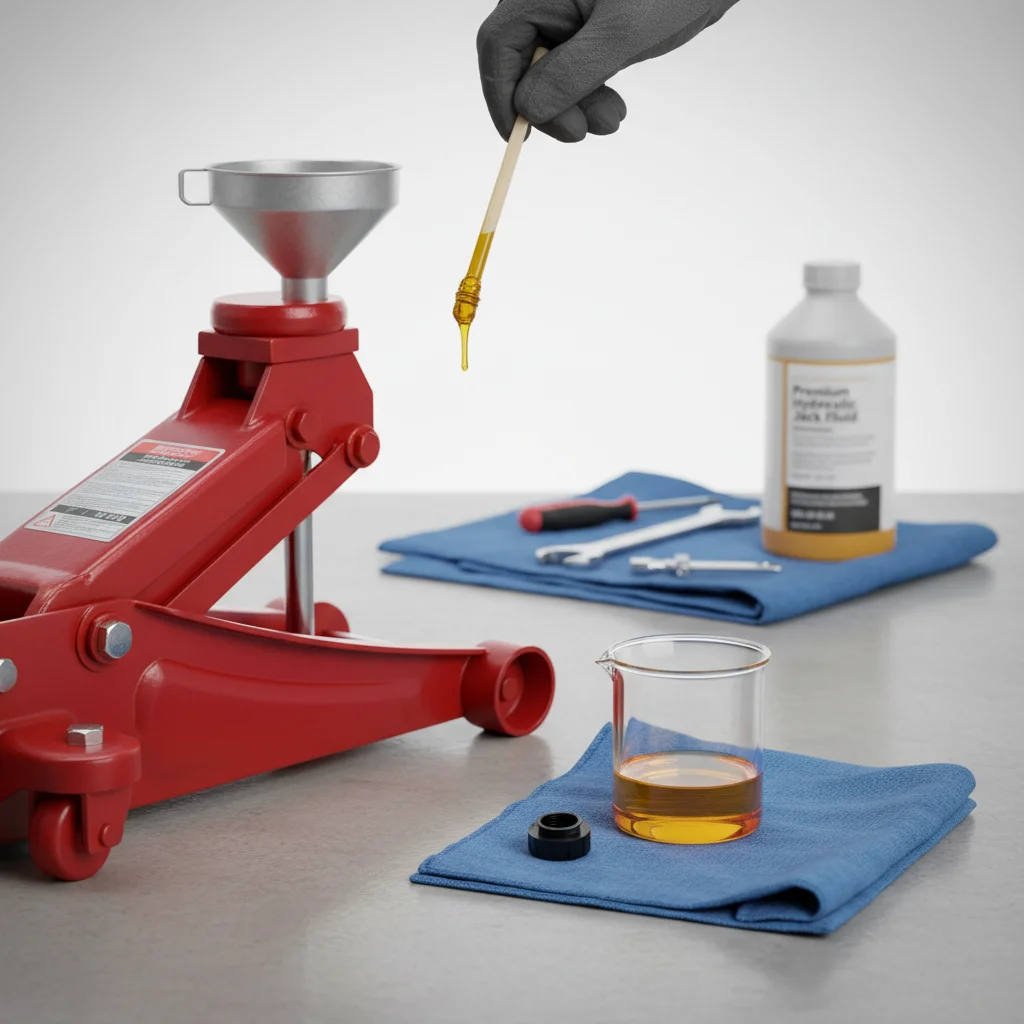
For optimal safety and performance, you should check your floor jack’s hydraulic fluid levels every three to six months, or more frequently if you use it daily. Maintaining the correct fluid level is crucial for the jack’s lifting capacity and overall longevity.
Why Hydraulic Fluid Levels Matter
The hydraulic fluid in your floor jack is the lifeblood of its lifting mechanism. It transmits force from the pump to the ram, allowing the jack to lift heavy loads. If the fluid level is too low, the jack may struggle to lift, operate erratically, or fail to reach its full extension. Conversely, an overfilled reservoir can lead to excessive pressure and potential seal damage.
Signs of Low Hydraulic Fluid
Several indicators suggest your floor jack might have low hydraulic fluid. These include a jack that lifts slowly, struggles to hold a load, or doesn’t extend to its maximum height. You might also notice a spongy feel when pumping the handle. If you observe any of these symptoms, it’s time to inspect the fluid level and top it off if necessary. Regular visual inspections for leaks around the seals and piston can also help prevent significant fluid loss.
How to Check and Top Off Fluid Levels
Checking the hydraulic fluid level is a straightforward process. First, ensure the jack is fully lowered and on a level surface. Locate the filler plug, usually a rubber or metal cap on the reservoir. Remove the plug and visually inspect the fluid level. Most manufacturers recommend the fluid level be within 1/4 to 1/2 inch below the filler hole. If it’s low, add a high-quality hydraulic jack oil slowly until it reaches the recommended level. Avoid using brake fluid or motor oil, as these can damage the jack’s internal components.
- Ensure the jack is fully lowered and on a level surface.
- Locate and remove the hydraulic fluid filler plug.
- Check the fluid level; it should be near the filler hole.
- Add appropriate hydraulic jack oil slowly if the level is low.
- Replace the filler plug securely after topping off.
Preventative Maintenance Tips
|
Our Picks for the Best Floor Jack in 2026
As an Amazon Associate I earn from qualifying purchases.
|
||
| Num | Product | Action |
|---|---|---|
| 1 | DNA Motoring TOOLS-00234 Low Profile Hydraulic Trolley Service/Floor Jack, 2 Ton (4000 lbs) Capacity, Lifting Range 5.1"-13", Black |

|
| 2 | Floor Jack 2.5 Ton (5500 lbs), Low Profile Floor Jack with Single Piston Pump, Heavy Duty Steel Hydraulic Jack for Car, Jack for Car with Lifting Range 3.4'' to 14.6'' |
|
| 3 | 3 Ton Floor Jack (6600 lbs), Heavy Duty Hydraulic Jack for Car, Heavy-Duty Floor Jack with Single Piston Pump, Quick Lift Car Jack 3 ton with Lifting Range 5.5'' to 18.5'' |
|
| 4 | 3 Ton Low Profile, Aluminum and Steel Racing Floor Jack with Dual Pistons Quick Lift Pump for Sport Utility Vehicle, Lifting Range 3-15/16" min to 18-5/16" max, Net Weight 58.5 lb, Red |
|
| 5 | Floor Jack 3 Ton Capacity Fast Lift Service Jack Steel Heavy Duty Hydraulic Car Jack |
|
| 6 | Amazon Basics Hydraulic Floor and Portable Car Jack, 2.2 Short Ton/ 2 Metric Ton/ 2 Tonne / 2000 kg Capacity, Slow Release, Red |
|
| 7 | Low Profile Floor Jack 3 Ton (6600 lbs), Heavy Duty Hydraulic Jack for Car, Heavy-Duty Floor Jack with Dual Pistons Quick Lift Pump, Car Floor Jack with Lifting Range 3-1/8'' to 19-7/8'' |
|
| 8 | VEVOR 2.5 Ton Low Profile, Heavy-Duty Steel Racing Floor Jack with Single Piston Lift Pump, Lifting Range 3.35"-14.96" |
|
| 9 | Dewalt DWHT83550 TOUGHSERIES Construction Jack |
|
| 10 | DNA Motoring Low Profile Hydraulic Trolley Service/Floor Jack, 2 Ton (4000 lbs) Capacity, Lifting Range 5.1"-13", Blue, TOOLS-00474 |
|
Beyond regular fluid checks, several practices can extend the life of your floor jack. Always store your jack in a clean, dry environment to prevent rust and corrosion. Avoid overloading the jack beyond its rated capacity, as this puts undue stress on the hydraulic system and can lead to premature wear. Periodically clean the exterior of the jack to remove dirt and debris that could contaminate the fluid or moving parts.Investing in a good quality jack and following these simple maintenance steps will ensure it remains a reliable tool in your garage for years to come.
Choosing the Right Hydraulic Fluid
Selecting the correct hydraulic fluid is paramount for your floor jack’s performance and longevity. Always refer to your jack’s owner’s manual for the manufacturer’s specific recommendations. Generally, a non-foaming, anti-wear hydraulic jack oil is suitable. These fluids are designed to operate under high pressure and temperature fluctuations, providing optimal lubrication and protecting internal components from wear. Using an incorrect fluid can lead to seal degradation, pump failure, and reduced lifting efficiency.Prioritizing the correct fluid type will save you from costly repairs and ensure consistent, safe operation.
