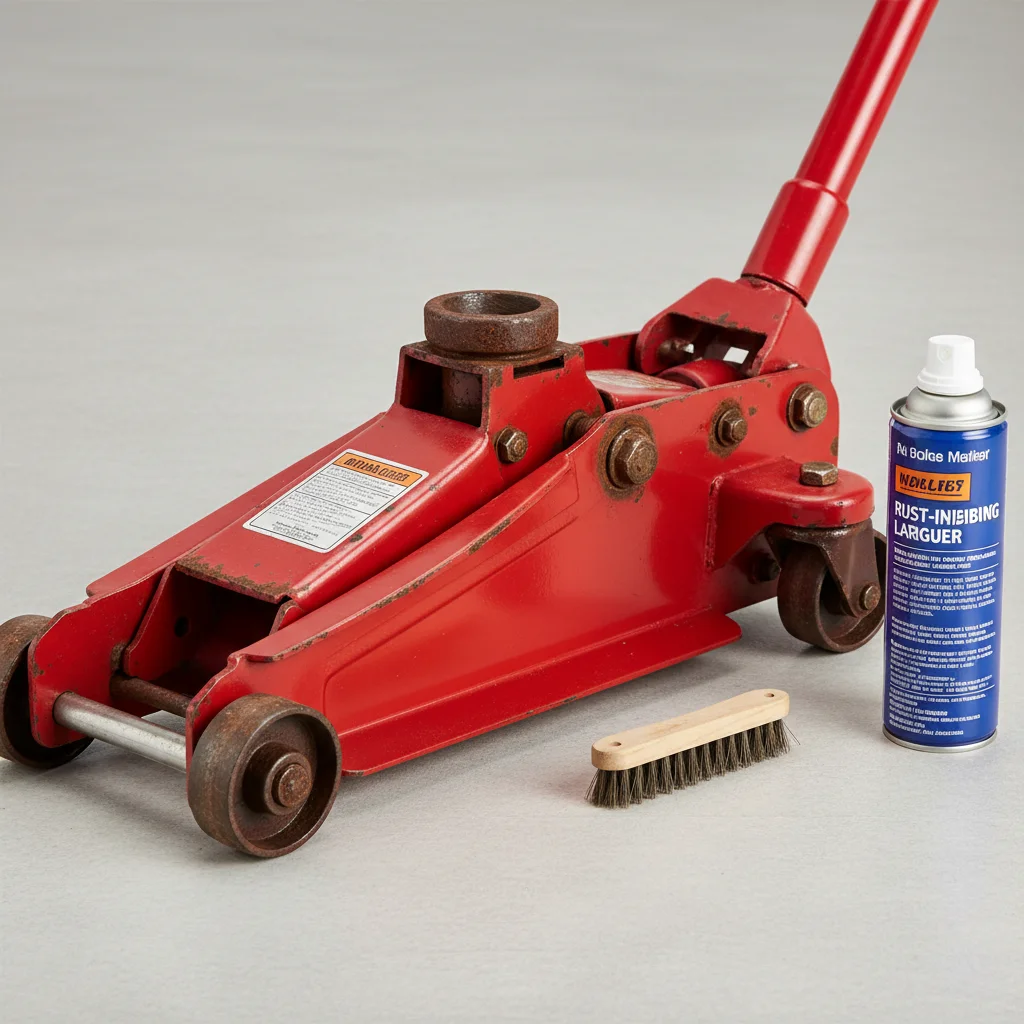
Regular inspection for rust on your floor jack is crucial for safety and longevity. You should visually inspect your floor jack for any signs of rust at least once every three months, or more frequently if it’s stored in a humid environment or used outdoors. Addressing rust early can prevent structural weakening and hydraulic system damage, ensuring your equipment remains reliable for lifting vehicles.
Why Rust is a Major Concern for Floor Jacks
Rust, or iron oxide, forms when iron or steel components are exposed to oxygen and moisture. For a floor jack, this process can compromise the structural integrity of critical parts like the lifting arm, frame, and even the hydraulic cylinder. A rusted frame might bend or crack under load, leading to catastrophic failure. Furthermore, rust can pit the polished surfaces of the hydraulic ram, causing seals to fail and hydraulic fluid to leak, which directly impacts the jack’s ability to lift and hold weight safely.
Ignoring rust can lead to expensive repairs or the need for a complete replacement. Small patches of surface rust can quickly spread, especially in areas where paint has chipped away. It’s not just about aesthetics; it’s about the fundamental safety of the tool you rely on to support thousands of pounds.
Identifying and Preventing Rust on Your Floor Jack
When inspecting your floor jack, pay close attention to the welds, pivot points, and the base of the frame, as these areas are prone to moisture accumulation. Look for reddish-brown discoloration, flaking paint, or rough textures. The wheels and casters are also common spots for rust due to their proximity to the ground and potential exposure to water. For prevention, always store your floor jack in a dry, covered area. If it must be stored in a garage with fluctuating humidity, consider using a dehumidifier or covering the jack with a breathable tarp.
Applying a thin coat of rust-inhibiting primer to any exposed metal surfaces after cleaning can offer an extra layer of protection. For the hydraulic ram, a light application of silicone spray or a similar lubricant can help repel moisture and prevent pitting.
Steps to Address Existing Rust
|
Our Picks for the Best Floor Jack in 2026
As an Amazon Associate I earn from qualifying purchases.
|
||
| Num | Product | Action |
|---|---|---|
| 1 | Floor Jack 3 Ton Capacity Fast Lift Service Jack Steel Heavy Duty Hydraulic Car Jack |

|
| 2 | 3 Ton Floor Jack (6600 lbs), Heavy Duty Hydraulic Jack for Car, Heavy-Duty Floor Jack with Single Piston Pump, Quick Lift Car Jack 3 ton with Lifting Range 5.5'' to 18.5'' |
|
| 3 | Dewalt DWHT83550 TOUGHSERIES Construction Jack |
|
| 4 | Low Profile Floor Jack 3 Ton (6600 lbs), Heavy Duty Hydraulic Jack for Car, Heavy-Duty Floor Jack with Dual Pistons Quick Lift Pump, Car Floor Jack with Lifting Range 3-1/8'' to 19-7/8'' |
|
| 5 | 3 Ton Low Profile, Aluminum and Steel Racing Floor Jack with Dual Pistons Quick Lift Pump for Sport Utility Vehicle, Lifting Range 3-15/16" min to 18-5/16" max, Net Weight 58.5 lb, Red |
|
| 6 | Floor Jack 2.5 Ton (5500 lbs), Low Profile Floor Jack with Single Piston Pump, Heavy Duty Steel Hydraulic Jack for Car, Jack for Car with Lifting Range 3.4'' to 14.6'' |
|
| 7 | DNA Motoring Low Profile Hydraulic Trolley Service/Floor Jack, 2 Ton (4000 lbs) Capacity, Lifting Range 5.1"-13", Blue, TOOLS-00474 |
|
| 8 | VEVOR 2.5 Ton Low Profile, Heavy-Duty Steel Racing Floor Jack with Single Piston Lift Pump, Lifting Range 3.35"-14.96" |
|
| 9 | Amazon Basics Hydraulic Floor and Portable Car Jack, 2.2 Short Ton/ 2 Metric Ton/ 2 Tonne / 2000 kg Capacity, Slow Release, Red |
|
| 10 | DNA Motoring TOOLS-00234 Low Profile Hydraulic Trolley Service/Floor Jack, 2 Ton (4000 lbs) Capacity, Lifting Range 5.1"-13", Black |
|
If you discover rust on your floor jack, immediate action is necessary. For light surface rust, you can often remove it with a wire brush or sandpaper, followed by cleaning the area thoroughly and applying a rust-inhibiting primer and paint. For more severe rust, especially on structural components, professional assessment might be required. Never attempt to use a floor jack with deep, penetrating rust that has compromised the metal’s thickness or integrity.
Here are key steps to address rust:
- Clean the rusted area with a wire brush or sandpaper.
- Wipe down the surface with a degreaser to remove any residue.
- Apply a rust-converter product to neutralize remaining rust.
- Prime the area with a rust-inhibiting primer.
- Paint the primed area with a durable, protective enamel.
Maintaining Your Floor Jack for Rust-Free Operation
Beyond regular inspections, a proactive maintenance schedule can significantly extend the life of your floor jack and keep it rust-free. After each use, especially if the jack has been exposed to moisture or dirt, wipe it down thoroughly. Ensure all moving parts are lubricated regularly to prevent friction and create a barrier against moisture. Check the condition of the paint and touch up any chips or scratches promptly to prevent rust from taking hold.
Consider the environment where your floor jack is stored. If your garage floor is often damp, placing the jack on a pallet or a piece of plywood can elevate it and reduce direct contact with moisture. These small habits contribute to the overall health and safety of your equipment.
The Impact of Rust on Floor Jack Performance and Safety
Rust doesn’t just look bad; it fundamentally undermines the performance and safety of your floor jack. A rusted hydraulic cylinder can lead to internal leaks, reducing lifting power and causing the jack to slowly descend under load. Rusted pivot points can seize, making the jack difficult to operate smoothly. Most critically, structural rust can lead to sudden and catastrophic failure, posing a severe risk of injury or damage to the vehicle being worked on. Prioritizing rust prevention and timely treatment is an investment in both your equipment’s longevity and your personal safety.
