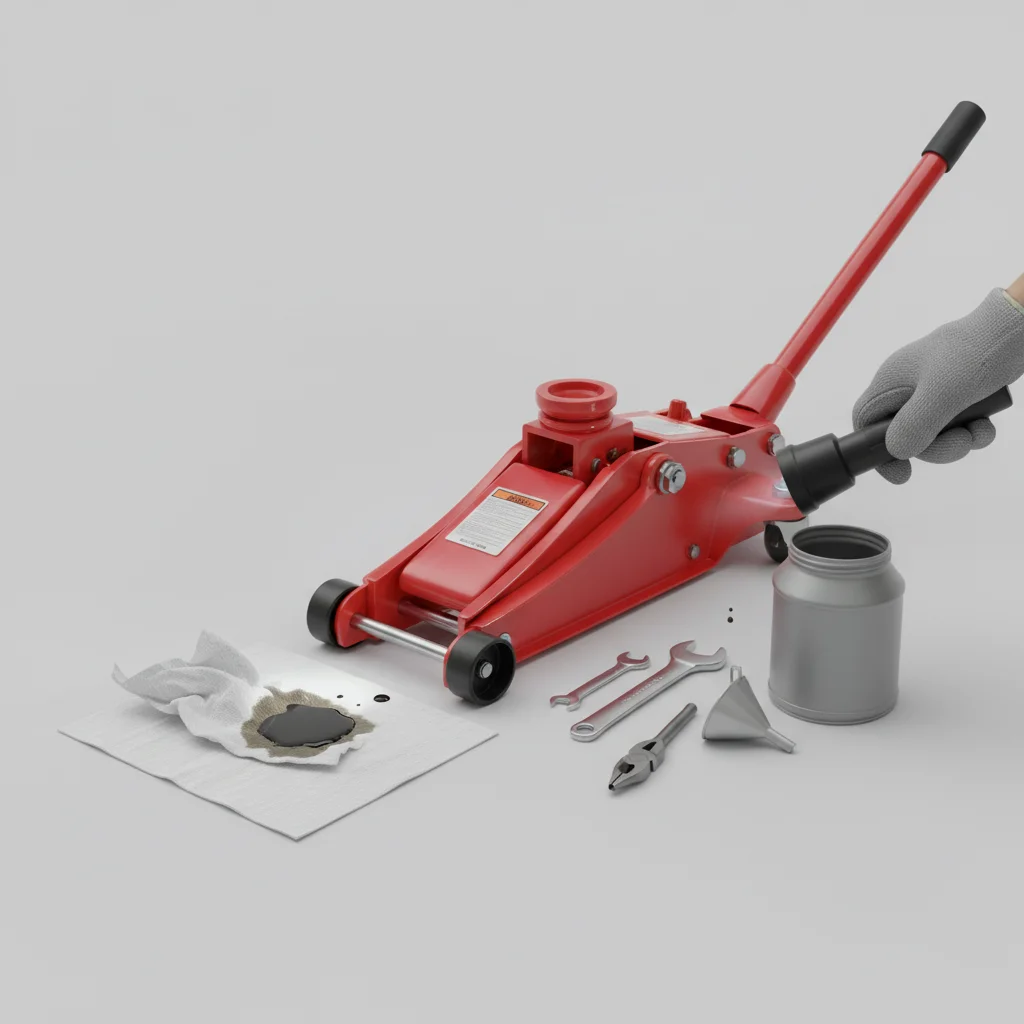
Regular floor jack maintenance is crucial for safety and longevity, and checking for leaks should be a routine task performed at least once every three months, or more frequently with heavy use. Hydraulic fluid leaks can indicate failing seals, loose fittings, or even a compromised reservoir, all of which can lead to a dangerous loss of lifting capacity. Addressing these issues promptly prevents potential accidents and extends the life of your equipment.
Why Regular Leak Checks Are Essential
Hydraulic fluid is the lifeblood of your floor jack. Any loss of this fluid compromises the jack’s ability to lift and hold weight, creating a significant safety hazard. A small leak can quickly escalate into a major problem, leading to complete hydraulic failure. Regular inspections allow you to catch these issues early, often before they become critical. This proactive approach not only protects your investment but, more importantly, ensures your safety when working under a vehicle.
Identifying Common Leak Points
When inspecting your floor jack for leaks, pay close attention to several key areas. The most common leak points include the main ram seal, the pump piston seals, and the various fittings and connections along the hydraulic lines. Also, check the reservoir cap for any signs of seepage. A visual inspection for drips or wet spots on the jack’s body or on the ground beneath it is a good starting point. For a more thorough check, clean the jack thoroughly and then operate it a few times, observing for any new signs of fluid.
Steps to Take When You Find a Leak
|
Our Picks for the Best Floor Jack in 2026
As an Amazon Associate I earn from qualifying purchases.
|
||
| Num | Product | Action |
|---|---|---|
| 1 | 3 Ton Low Profile, Aluminum and Steel Racing Floor Jack with Dual Pistons Quick Lift Pump for Sport Utility Vehicle, Lifting Range 3-15/16" min to 18-5/16" max, Net Weight 58.5 lb, Red |

|
| 2 | Amazon Basics Hydraulic Floor and Portable Car Jack, 2.2 Short Ton/ 2 Metric Ton/ 2 Tonne / 2000 kg Capacity, Slow Release, Red |
|
| 3 | Low Profile Floor Jack 3 Ton (6600 lbs), Heavy Duty Hydraulic Jack for Car, Heavy-Duty Floor Jack with Dual Pistons Quick Lift Pump, Car Floor Jack with Lifting Range 3-1/8'' to 19-7/8'' |
|
| 4 | DNA Motoring TOOLS-00234 Low Profile Hydraulic Trolley Service/Floor Jack, 2 Ton (4000 lbs) Capacity, Lifting Range 5.1"-13", Black |
|
| 5 | VEVOR 2.5 Ton Low Profile, Heavy-Duty Steel Racing Floor Jack with Single Piston Lift Pump, Lifting Range 3.35"-14.96" |
|
| 6 | Floor Jack 2.5 Ton (5500 lbs), Low Profile Floor Jack with Single Piston Pump, Heavy Duty Steel Hydraulic Jack for Car, Jack for Car with Lifting Range 3.4'' to 14.6'' |
|
| 7 | Dewalt DWHT83550 TOUGHSERIES Construction Jack |
|
| 8 | DNA Motoring Low Profile Hydraulic Trolley Service/Floor Jack, 2 Ton (4000 lbs) Capacity, Lifting Range 5.1"-13", Blue, TOOLS-00474 |
|
| 9 | 3 Ton Floor Jack (6600 lbs), Heavy Duty Hydraulic Jack for Car, Heavy-Duty Floor Jack with Single Piston Pump, Quick Lift Car Jack 3 ton with Lifting Range 5.5'' to 18.5'' |
|
| 10 | Floor Jack 3 Ton Capacity Fast Lift Service Jack Steel Heavy Duty Hydraulic Car Jack |
|
If you discover a leak, the first step is to identify its source. A small leak from a fitting might be resolved by simply tightening it. However, if the leak is coming from a seal, it typically indicates that the seal needs to be replaced. This often requires disassembling part of the jack, which can be a more involved repair. Always consult your floor jack’s owner’s manual for specific repair procedures and recommended replacement parts. Ignoring a leak is never an option, as it directly impacts the jack’s reliability and your safety.
Preventative Measures to Avoid Leaks
Preventing leaks is always better than repairing them. Store your floor jack in a clean, dry environment to protect seals from degradation due to dirt and moisture. Avoid overloading the jack beyond its rated capacity, as excessive pressure can stress seals and fittings. Regularly clean the jack to prevent grime buildup that can obscure small leaks. Additionally, using the correct type of hydraulic fluid, as specified by the manufacturer, is vital for maintaining seal integrity and overall system health.
When to Seek Professional Help
While some minor leak repairs can be handled by a DIY mechanic, certain situations warrant professional attention. If you’re unsure about the source of a leak, lack the proper tools for disassembly, or if the leak persists after your repair attempts, it’s wise to consult a qualified service technician. Complex hydraulic systems can be tricky, and improper repairs can lead to further damage or, more critically, compromise the jack’s safety features. Prioritizing safety should always be your top concern.
- Inspect all hydraulic lines and fittings for tightness.
- Check the main ram and pump piston for any visible fluid.
- Examine the reservoir cap for signs of seepage.
- Look for any wet spots or drips on the floor beneath the jack.
- Operate the jack through its full range of motion to stress test seals.
