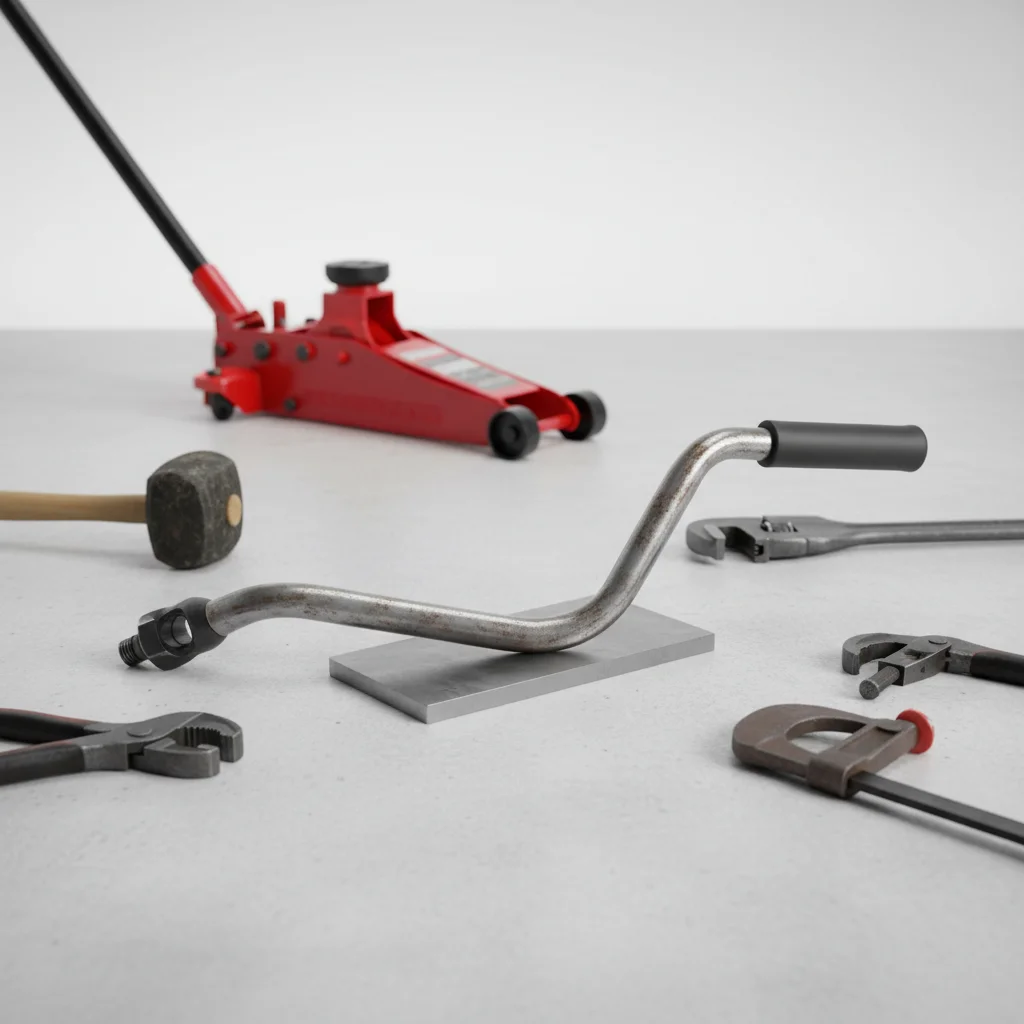
A bent floor jack handle can significantly hinder the safe and efficient operation of your lifting equipment. While it might seem like a minor issue, a compromised handle can affect leverage, control, and even the integrity of the hydraulic pump mechanism. The good news is that in many cases, a bent floor jack handle can be repaired, saving you the cost of a full replacement. The feasibility of repair largely depends on the severity of the bend and the material of the handle, but minor to moderate bends are often fixable with the right approach.
Assessing the Damage: Is Your Handle Repairable?
Before attempting any repair, thoroughly inspect the bent floor jack handle. Look for cracks, severe crimping, or any signs of metal fatigue, especially at the bend point. Handles made from solid steel are generally more forgiving and amenable to straightening than hollow or thinner-walled handles. If the bend is sharp, creased, or shows any signs of material tearing, repair might compromise its structural integrity, making replacement the safer option. A gentle, gradual curve is usually a good candidate for DIY repair.
Tools and Techniques for Straightening a Bent Handle
To straighten a bent floor jack handle, you’ll typically need a sturdy workbench, a large vise, a rubber mallet or dead blow hammer, and potentially a pipe or cheater bar for leverage. Secure the handle firmly in the vise, positioning the bend just outside the jaws. Apply steady, controlled pressure to gradually bend the handle back into its original shape. For more stubborn bends, a pipe slipped over the handle can provide additional leverage. Always work slowly and avoid sudden, forceful impacts that could further damage the metal. Heat can sometimes assist in straightening, but it should be used with extreme caution and only on solid steel handles, as excessive heat can weaken the metal.
- Secure the handle in a heavy-duty vise.
- Apply gradual, controlled pressure to the bent section.
- Use a rubber mallet for gentle persuasion on minor bends.
- Employ a cheater bar or pipe for increased leverage on tougher bends.
- Regularly check for straightness and avoid over-bending.
When to Consider a Replacement Handle
|
Our Picks for the Best Floor Jack in 2026
As an Amazon Associate I earn from qualifying purchases.
|
||
| Num | Product | Action |
|---|---|---|
| 1 | DNA Motoring TOOLS-00234 Low Profile Hydraulic Trolley Service/Floor Jack, 2 Ton (4000 lbs) Capacity, Lifting Range 5.1"-13", Black |

|
| 2 | Dewalt DWHT83550 TOUGHSERIES Construction Jack |
|
| 3 | Floor Jack 2.5 Ton (5500 lbs), Low Profile Floor Jack with Single Piston Pump, Heavy Duty Steel Hydraulic Jack for Car, Jack for Car with Lifting Range 3.4'' to 14.6'' |
|
| 4 | VEVOR 2.5 Ton Low Profile, Heavy-Duty Steel Racing Floor Jack with Single Piston Lift Pump, Lifting Range 3.35"-14.96" |
|
| 5 | Floor Jack 3 Ton Capacity Fast Lift Service Jack Steel Heavy Duty Hydraulic Car Jack |
|
| 6 | Amazon Basics Hydraulic Floor and Portable Car Jack, 2.2 Short Ton/ 2 Metric Ton/ 2 Tonne / 2000 kg Capacity, Slow Release, Red |
|
| 7 | 3 Ton Floor Jack (6600 lbs), Heavy Duty Hydraulic Jack for Car, Heavy-Duty Floor Jack with Single Piston Pump, Quick Lift Car Jack 3 ton with Lifting Range 5.5'' to 18.5'' |
|
| 8 | DNA Motoring Low Profile Hydraulic Trolley Service/Floor Jack, 2 Ton (4000 lbs) Capacity, Lifting Range 5.1"-13", Blue, TOOLS-00474 |
|
| 9 | Low Profile Floor Jack 3 Ton (6600 lbs), Heavy Duty Hydraulic Jack for Car, Heavy-Duty Floor Jack with Dual Pistons Quick Lift Pump, Car Floor Jack with Lifting Range 3-1/8'' to 19-7/8'' |
|
| 10 | 3 Ton Low Profile, Aluminum and Steel Racing Floor Jack with Dual Pistons Quick Lift Pump for Sport Utility Vehicle, Lifting Range 3-15/16" min to 18-5/16" max, Net Weight 58.5 lb, Red |
|
There are instances where repairing a bent floor jack handle is either impractical or unsafe. If the handle is severely kinked, cracked, or shows signs of metal fatigue, attempting to straighten it could lead to a catastrophic failure during use. Similarly, if the handle is made of a lightweight alloy or has a complex shape that makes straightening difficult without specialized tools, a replacement is often the better choice. Always prioritize safety over cost savings when dealing with lifting equipment. A new handle ensures the jack operates as intended and minimizes the risk of accidents.
Preventative Measures to Avoid Future Bends
To prevent your floor jack handle from bending again, always use it within the jack’s rated capacity. Avoid using the handle as a pry bar or for any purpose other than operating the jack. Store the jack in a location where the handle is not subjected to accidental impacts or heavy objects falling on it. Regular inspection of the handle for any signs of stress or minor bends can help you address issues before they become severe. Proper technique during lifting and lowering operations also contributes to the longevity of the handle and the entire jack.Investing in a high-quality floor jack with a robust handle design can also reduce the likelihood of bending.
