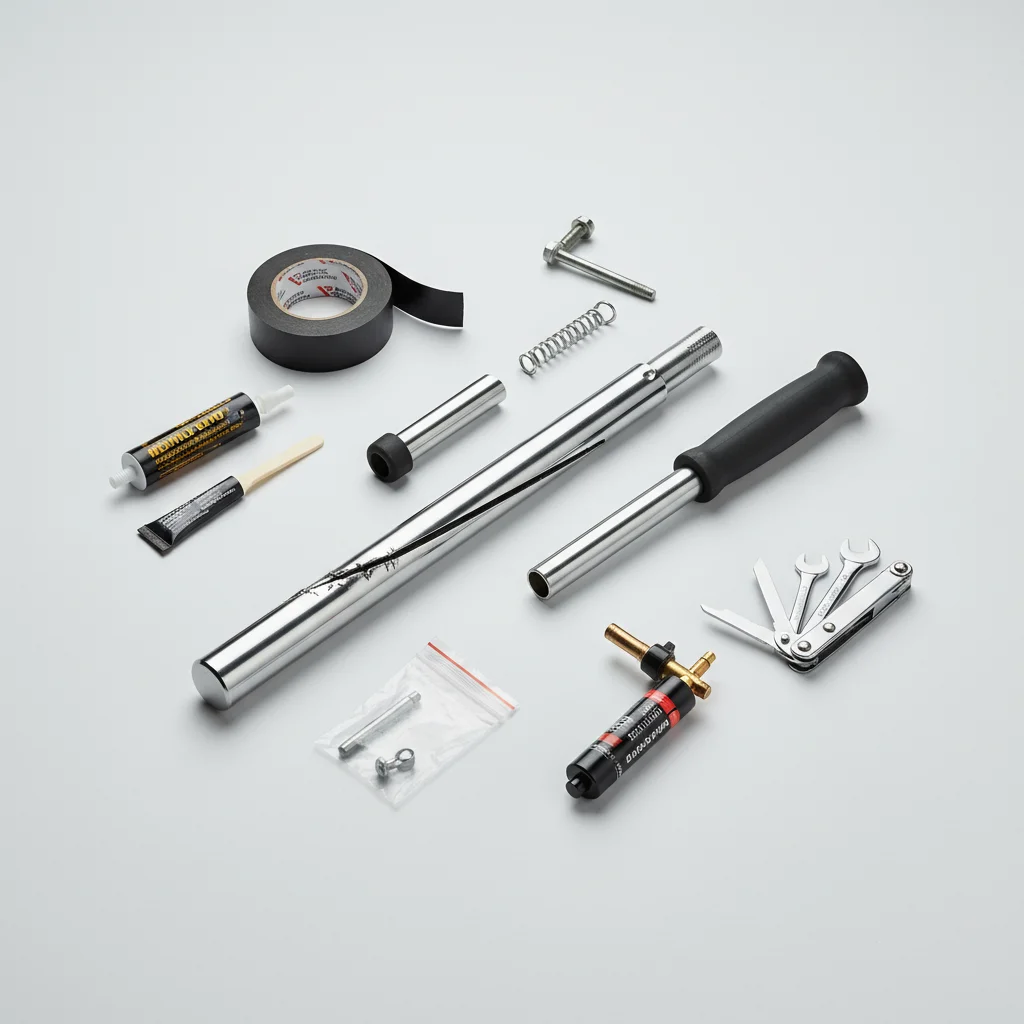
A malfunctioning floor jack handle can be a major hindrance, but many common issues can be fixed with simple DIY repairs. Whether it’s a bent handle, a loose connection, or a problem with the release mechanism, understanding the typical culprits and their solutions can save you time and money.
Understanding Common Handle Problems
Floor jack handles endure significant stress during operation, making them prone to wear and tear. One frequent issue is a bent handle, often caused by improper leverage or accidental impacts. Another common problem is a loose handle connection, which can result from worn pins or bolts. The release mechanism, integrated into many handles, can also fail due to internal component wear or debris. For expert automotive lifting reviews on this site.
Fixing a Bent Floor Jack Handle
If your floor jack handle is bent, the repair method depends on the severity. For minor bends, you might be able to straighten it using a vise and a rubber mallet. Secure the handle firmly in the vise, protecting it with wood blocks, and gently tap the bent section until it’s straight. For more severe bends, especially in critical stress points, replacement might be the safer option to ensure structural integrity. Always inspect for cracks after straightening.
Tightening a Loose Handle Connection
A loose handle often indicates worn or missing fasteners. First, identify the type of connection – typically a pin, bolt, or set screw. If it’s a pin, check for wear on the pin itself and the corresponding holes in the handle and pump assembly. Replacing a worn pin with a new, correctly sized one is usually the solution. For bolted connections, ensure the bolt is tightened to the manufacturer’s specifications, and consider using thread locker to prevent future loosening. If the holes are elongated, you might need to drill them out slightly and use a larger diameter bolt or a repair sleeve.
Troubleshooting the Release Mechanism
|
Our Picks for the Best Floor Jack in 2026
As an Amazon Associate I earn from qualifying purchases.
|
||
| Num | Product | Action |
|---|---|---|
| 1 | VEVOR 2.5 Ton Low Profile, Heavy-Duty Steel Racing Floor Jack with Single Piston Lift Pump, Lifting Range 3.35"-14.96" |

|
| 2 | 3 Ton Floor Jack (6600 lbs), Heavy Duty Hydraulic Jack for Car, Heavy-Duty Floor Jack with Single Piston Pump, Quick Lift Car Jack 3 ton with Lifting Range 5.5'' to 18.5'' |
|
| 3 | Amazon Basics Hydraulic Floor and Portable Car Jack, 2.2 Short Ton/ 2 Metric Ton/ 2 Tonne / 2000 kg Capacity, Slow Release, Red |
|
| 4 | Floor Jack 2.5 Ton (5500 lbs), Low Profile Floor Jack with Single Piston Pump, Heavy Duty Steel Hydraulic Jack for Car, Jack for Car with Lifting Range 3.4'' to 14.6'' |
|
| 5 | Dewalt DWHT83550 TOUGHSERIES Construction Jack |
|
| 6 | 3 Ton Low Profile, Aluminum and Steel Racing Floor Jack with Dual Pistons Quick Lift Pump for Sport Utility Vehicle, Lifting Range 3-15/16" min to 18-5/16" max, Net Weight 58.5 lb, Red |
|
| 7 | Floor Jack 3 Ton Capacity Fast Lift Service Jack Steel Heavy Duty Hydraulic Car Jack |
|
| 8 | Low Profile Floor Jack 3 Ton (6600 lbs), Heavy Duty Hydraulic Jack for Car, Heavy-Duty Floor Jack with Dual Pistons Quick Lift Pump, Car Floor Jack with Lifting Range 3-1/8'' to 19-7/8'' |
|
| 9 | DNA Motoring Low Profile Hydraulic Trolley Service/Floor Jack, 2 Ton (4000 lbs) Capacity, Lifting Range 5.1"-13", Blue, TOOLS-00474 |
|
| 10 | DNA Motoring TOOLS-00234 Low Profile Hydraulic Trolley Service/Floor Jack, 2 Ton (4000 lbs) Capacity, Lifting Range 5.1"-13", Black |
|
The release mechanism, often a twist-style or lever-style component on the handle, can become stiff or fail to release pressure. This is frequently due to accumulated dirt, old grease, or internal component wear. Begin by thoroughly cleaning the mechanism with a degreaser and a stiff brush. Then, apply a light lubricant to all moving parts. If the problem persists, the internal components, such as springs or ball bearings, might be worn and require replacement. Consult your jack’s manual for specific parts and disassembly instructions.
Preventative Maintenance for Handle Longevity
To extend the life of your floor jack handle, regular maintenance is key. Always store your jack in a clean, dry environment to prevent rust and corrosion. Avoid using the handle for purposes other than lifting and lowering, such as prying or hammering, which can cause damage. Periodically inspect all fasteners and connections for tightness and wear. Lubricate pivot points and the release mechanism annually with a suitable grease or oil.
- Inspect handle for bends or cracks before each use.
- Keep all fasteners tight; use thread locker if necessary.
- Clean and lubricate the release mechanism regularly.
- Store the jack properly to prevent rust and damage.
- Avoid using the handle as a pry bar or hammer.
When to Consider Handle Replacement
While many handle issues are repairable, there are times when replacement is the best course of action. If the handle is severely bent, cracked, or if the internal components of the release mechanism are extensively damaged and unavailable as replacement parts, a new handle assembly is often more cost-effective and safer than attempting a complex repair. Always prioritize safety when working with lifting equipment.

I had a slightly bent handle on my jack from an accidental drop, and I was worried it was toast. The advice on using a vise and a pipe for minor bends worked perfectly. It took a bit of muscle, but now it’s straight enough to use comfortably again. Definitely a useful guide for anyone with a similar issue.
My old floor jack handle was really giving me trouble with the release mechanism. I thought I’d have to buy a whole new jack, but the tips here about checking for internal component wear were spot on. A quick clean and a minor adjustment, and it’s working like new. Saved me a ton of money and hassle!
This was super helpful! My floor jack handle was getting stuck, making it a pain to lower my car. I followed the steps for lubricating the pivot points and checking for debris, and now it operates smoothly. It’s amazing how a little maintenance can make such a big difference. Highly recommend these fixes.
My main issue was a loose handle connection, and while the suggestions for checking worn pins or bolts were good, I still had some play after tightening everything. It’s better, but not perfect. Maybe my pins are just too far gone. Still, it gave me some good ideas to try.