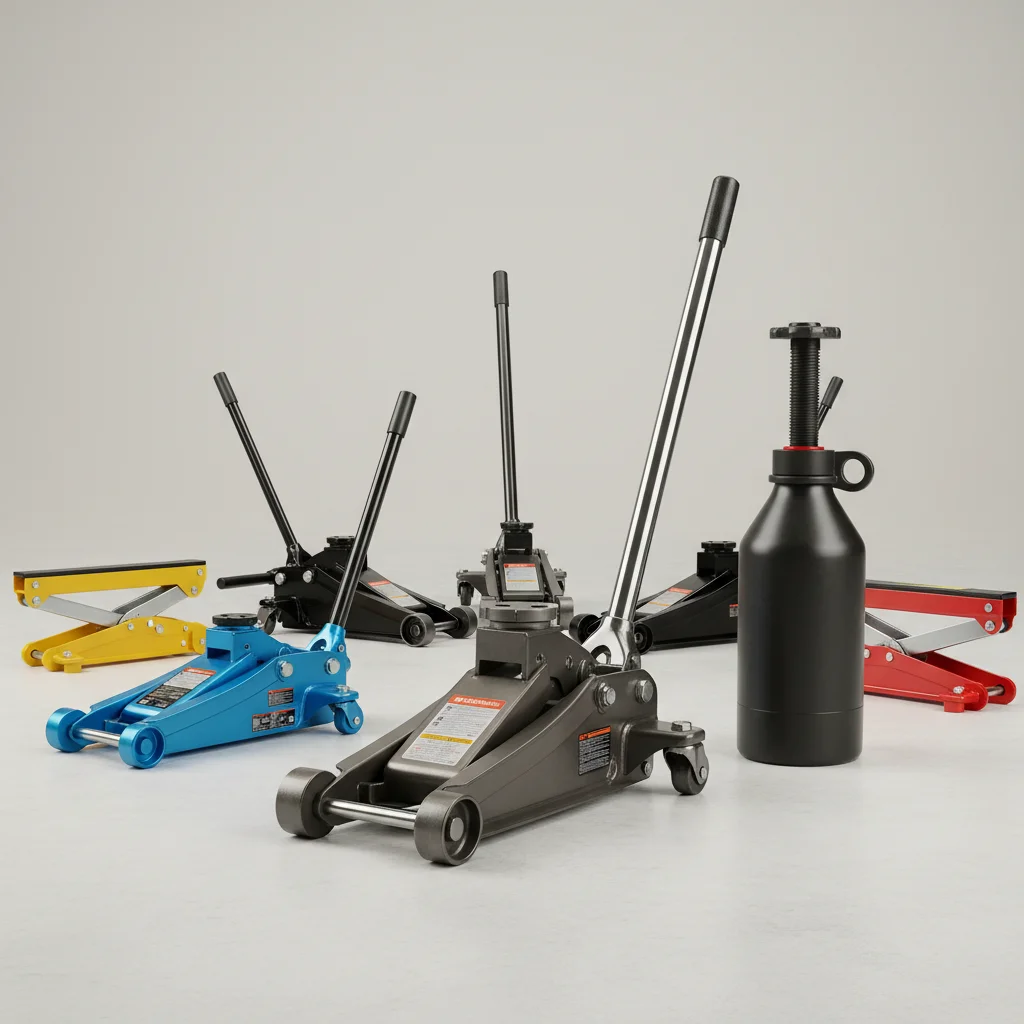
Determining the right floor jack capacity depends on the heaviest vehicle you plan to lift, with a general recommendation to choose a jack rated for at least three-quarters of your vehicle’s gross weight. For most passenger cars and light trucks, a 2-ton or 3-ton floor jack is sufficient, while heavier vehicles like large SUVs or commercial trucks may require a 4-ton or even 6-ton capacity.
Understanding Vehicle Weight and Jack Capacity
When selecting a floor jack, it’s crucial to understand the difference between your vehicle’s curb weight and its gross vehicle weight rating (GVWR). Curb weight is the weight of the vehicle without occupants or cargo, while GVWR is the maximum allowable total weight of the vehicle, including fuel, passengers, and cargo. Always use the GVWR as your primary reference when choosing a jack, as you’ll be lifting a portion of this total weight.
A common mistake is to match the jack’s capacity directly to the vehicle’s curb weight. However, you are only lifting one end or one corner of the vehicle at a time, not the entire weight. A good rule of thumb is to select a jack with a capacity that is at least 75% of the heaviest corner or end of your vehicle. For example, if your vehicle has a GVWR of 6,000 lbs, a 3-ton (6,000 lbs) jack is often adequate for lifting one end, as you’re typically lifting half the vehicle’s weight, or 3,000 lbs.
Common Capacity Ranges for Different Vehicles
The capacity of floor jacks varies widely to accommodate different vehicle types. Here’s a breakdown of common ranges:
- 1.5 to 2 Ton: Ideal for compact cars, sedans, and smaller SUVs. These are typically lightweight and easy to maneuver.
- 2.5 to 3 Ton: The most popular choice for a wide range of vehicles, including most sedans, minivans, and light trucks. This capacity offers a good balance of power and portability.
- 4 to 6 Ton: Necessary for larger SUVs, heavy-duty trucks, and some commercial vehicles. These jacks are robust and designed for significant loads.
- 8 Ton and Above: Primarily for specialized applications, such as heavy machinery, large commercial vehicles, or industrial use.
Always check your vehicle’s owner’s manual or the sticker on the driver’s side door jamb for its GVWR to make an informed decision.
Factors Influencing Your Capacity Choice
|
Our Picks for the Best Floor Jack in 2026
As an Amazon Associate I earn from qualifying purchases.
|
||
| Num | Product | Action |
|---|---|---|
| 1 | Low Profile Floor Jack 3 Ton (6600 lbs), Heavy Duty Hydraulic Jack for Car, Heavy-Duty Floor Jack with Dual Pistons Quick Lift Pump, Car Floor Jack with Lifting Range 3-1/8'' to 19-7/8'' |

|
| 2 | VEVOR 2.5 Ton Low Profile, Heavy-Duty Steel Racing Floor Jack with Single Piston Lift Pump, Lifting Range 3.35"-14.96" |
|
| 3 | 3 Ton Low Profile, Aluminum and Steel Racing Floor Jack with Dual Pistons Quick Lift Pump for Sport Utility Vehicle, Lifting Range 3-15/16" min to 18-5/16" max, Net Weight 58.5 lb, Red |
|
| 4 | DNA Motoring Low Profile Hydraulic Trolley Service/Floor Jack, 2 Ton (4000 lbs) Capacity, Lifting Range 5.1"-13", Blue, TOOLS-00474 |
|
| 5 | DNA Motoring TOOLS-00234 Low Profile Hydraulic Trolley Service/Floor Jack, 2 Ton (4000 lbs) Capacity, Lifting Range 5.1"-13", Black |
|
| 6 | Floor Jack 2.5 Ton (5500 lbs), Low Profile Floor Jack with Single Piston Pump, Heavy Duty Steel Hydraulic Jack for Car, Jack for Car with Lifting Range 3.4'' to 14.6'' |
|
| 7 | Dewalt DWHT83550 TOUGHSERIES Construction Jack |
|
| 8 | Floor Jack 3 Ton Capacity Fast Lift Service Jack Steel Heavy Duty Hydraulic Car Jack |
|
| 9 | Amazon Basics Hydraulic Floor and Portable Car Jack, 2.2 Short Ton/ 2 Metric Ton/ 2 Tonne / 2000 kg Capacity, Slow Release, Red |
|
| 10 | 3 Ton Floor Jack (6600 lbs), Heavy Duty Hydraulic Jack for Car, Heavy-Duty Floor Jack with Single Piston Pump, Quick Lift Car Jack 3 ton with Lifting Range 5.5'' to 18.5'' |
|
Beyond the vehicle’s weight, several other factors should influence your floor jack capacity decision. Consider the frequency of use; if you’re a professional mechanic lifting various vehicles daily, investing in a higher capacity, more durable jack is wise. For occasional DIY use, a mid-range capacity might suffice.
The type of work you’ll be performing also plays a role. If you’re only changing tires, a lower capacity might be acceptable. However, for more extensive undercarriage work, where stability and safety are paramount, a higher capacity jack provides an added layer of security. Always use jack stands in conjunction with your floor jack for any work performed under a lifted vehicle.
Safety Considerations with Floor Jack Capacity
Never exceed the rated capacity of your floor jack. Overloading a jack can lead to catastrophic failure, resulting in serious injury or damage to your vehicle. Always ensure the jack is placed on a flat, stable surface and that the load is centered on the jack’s saddle. Using a jack that is too small for the job is a significant safety risk.
It’s also important to consider the lift height. While capacity is about weight, lift height determines how high you can raise the vehicle. Ensure your chosen jack can lift your vehicle high enough to perform the necessary work, especially if you have a lifted truck or SUV.
Maintenance and Longevity of Your Floor Jack
Proper maintenance is key to ensuring your floor jack operates safely and efficiently for years. Regularly inspect the jack for any signs of damage, leaks, or wear. Keep the hydraulic fluid at the correct level and bleed air from the system as needed. A well-maintained jack will perform reliably within its rated capacity, reducing the risk of accidents.
Storing your floor jack in a clean, dry environment also contributes to its longevity. Avoid exposing it to extreme temperatures or moisture, which can degrade seals and hydraulic components. Following the manufacturer’s guidelines for maintenance and storage will help preserve your investment and ensure it’s ready when you need it.
